Food Security is Usually Discussed as A Hunger Issue. It is Also an Economic One.
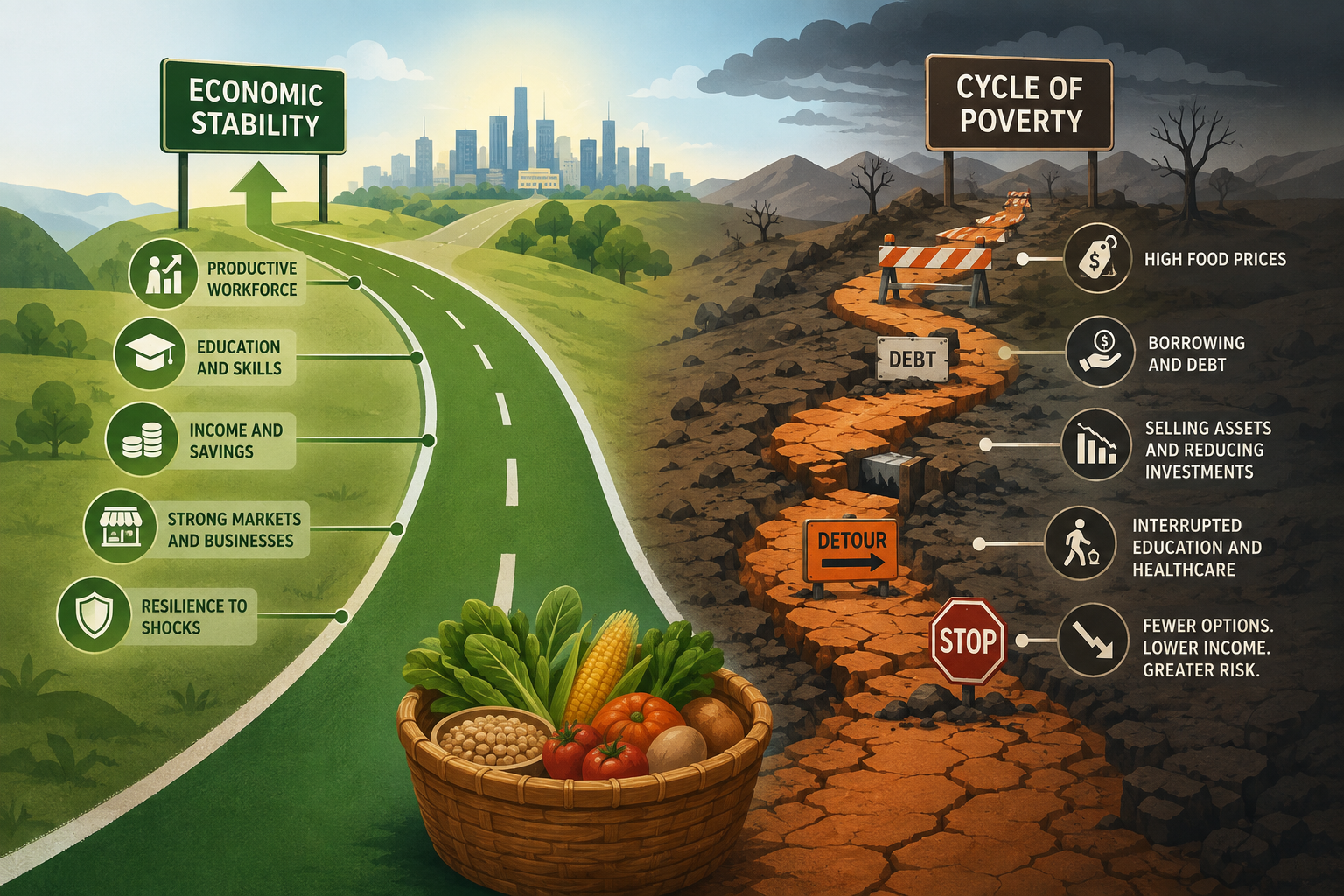
A family that cannot reliably afford food does not simply eat less. It may spend savings, borrow money, sell livestock, delay other expenses or sacrifice investments that could generate future income.
Multiply those decisions across millions of households and the connection between food security and economic stability becomes impossible to ignore.
Food sits close to almost everything an economy needs to function: health, worker productivity, household purchasing power, education, agricultural livelihoods and resilient local markets.
In 2025, approximately 2.1 billion people experienced moderate or severe food insecurity, while 2.69 billion people—nearly one-third of humanity—could not afford a healthy diet. In Africa, that figure reached 66.6 percent of the population.
The question, then, is not simply whether enough food exists.
It is whether people can reliably produce it, purchase it and withstand the shocks that make both harder.
Food Insecurity Can Turn One Crisis Into the Next
When food prices rise, households with little disposable income face immediate trade-offs.
Food competes with medicine, school fees, transportation, savings and the inputs needed to earn future income.
The World Food Programme tracks these responses as livelihood coping strategies. Families facing food insecurity may borrow money, sell productive assets, consume seed stocks intended for the next season or cut spending on fertilizer, animal feed and other inputs.
Those choices may solve an immediate problem while creating a longer-term one.
A household can survive today’s crisis by weakening its ability to survive tomorrow’s.
That is how food insecurity becomes economic instability.
Nutrition is Human Capital
The consequences can also last for decades.
World Bank research estimates that per-capita income in developing countries would be 5 to 7 percent higher if today’s workforce had not experienced childhood stunting. In Africa and South Asia, the estimated penalty is roughly 9 percent of GDP per capita.
Malnutrition can affect cognitive development, educational attainment, physical capacity and eventually earnings.
Nutrition also depends on conditions beyond food itself, including the often-overlooked relationship between clean water and nutrition.
Put simply:
Nutrition is human capital.
A healthy child is better able to learn. A healthy adult is better able to work. Food security therefore protects one of an economy’s most valuable assets: the productive capacity of its people.
Food Systems are Economies
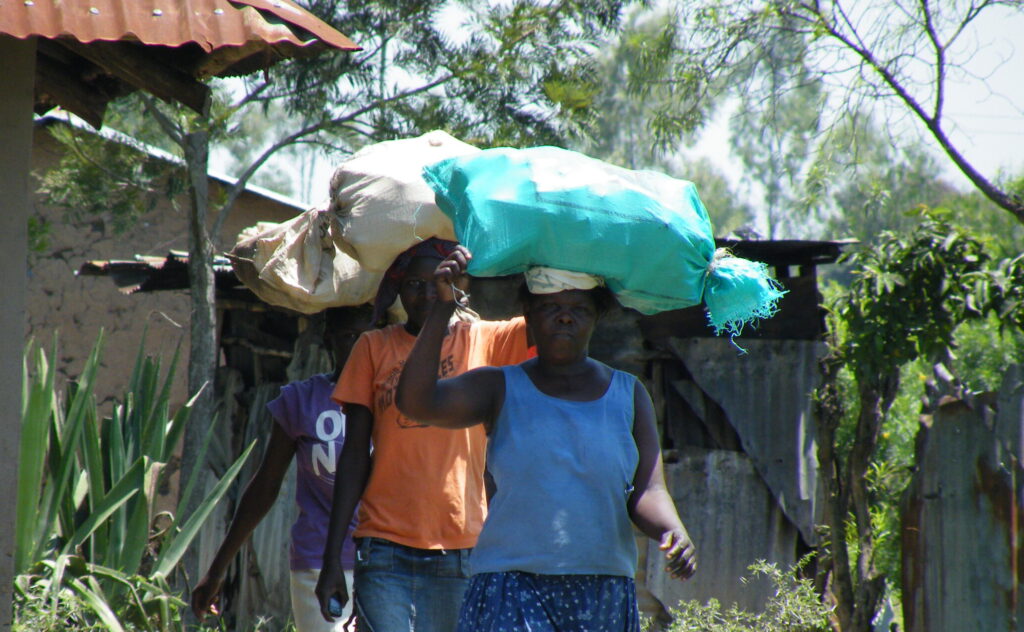
Food is not only something households consume. It is something millions of people earn their livelihoods producing, processing, transporting and selling.
In 2023, nearly 1.4 billion people were employed in agrifood systems worldwide.
A failed harvest can therefore trigger more than a food shortage. It can reduce farmer income, eliminate work, increase prices and reduce spending throughout a local economy.
A productive food system can do the reverse. Farmers purchase inputs. Workers earn wages. Traders move crops. Processors add value. Markets generate income.
And production alone is not enough. Storage, transportation, processing, access to markets and household purchasing power all determine whether food ultimately creates both nutrition and economic value.
Food security is not simply an agricultural issue.
It is also a market, infrastructure, finance and income issue.
Women are Already Central to This Economy
This is particularly important in sub-Saharan Africa.
Approximately 76 percent of working women in the region are employed in agrifood systems, and women make up 49 percent of the agrifood workforce.
Yet women continue to face unequal access to land, finance, resources and economic opportunities. In 28 of 33 sub-Saharan African countries with available data, men are more likely than women to own agricultural land or hold secure land rights.
Globally, FAO estimates that closing gender gaps in farm productivity and agricultural wages could add nearly $1 trillion to global GDP and reduce food insecurity for 45 million people.
That is not only an argument for equity.
It is an economic efficiency argument.
When a significant part of the food-system workforce lacks access to the assets required to be fully productive, the entire economy absorbs the loss.
This is also why women-led poverty solutions that expand access to land, agricultural knowledge, finance and markets can have effects far beyond individual households.
What This Looks Like at Household Level
Global figures can make these relationships feel abstract. At household level, the economics are much easier to see.
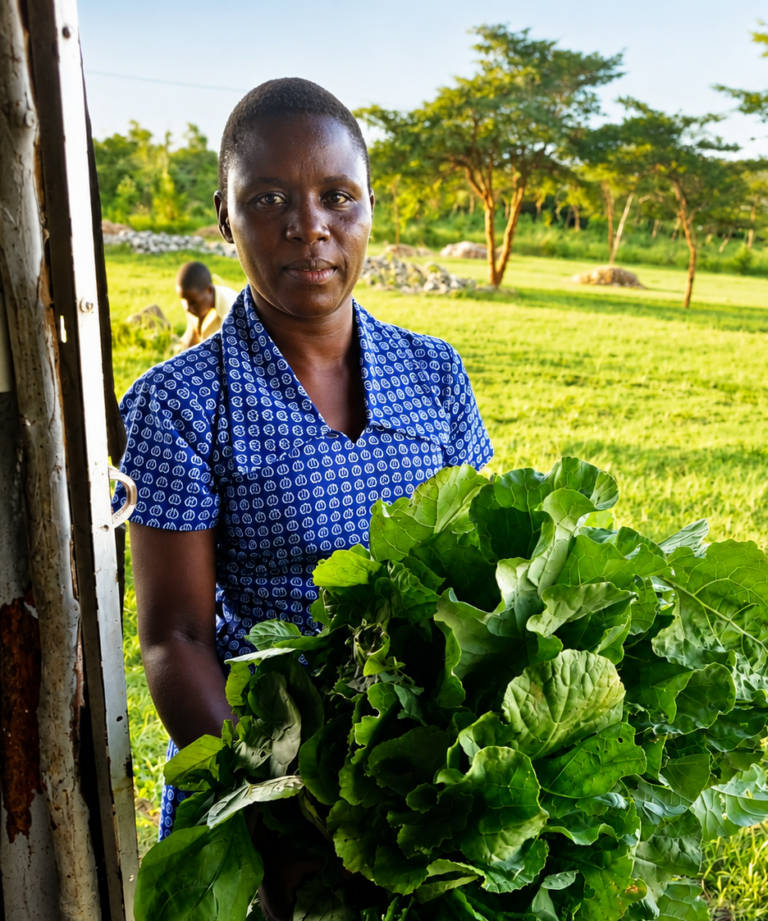
In Uganda, farmer Kemigisa Ritah works approximately one acre of land. After learning bio-intensive and regenerative farming techniques, she diversified her production and began generating approximately 830,000 Ugandan shillings, or about $237, per month from her farm.
The significance is not simply that she grew more food.
Production became income. That income helped pay school fees and household expenses while the farm provided nutritious food for her family.
The same acre was performing several economic functions at once.
Food can be both an essential need and a productive asset.
Food Security Creates Room to Absorb Shocks
No household or economy is immune to drought, inflation, illness, conflict or market disruption.
Food security does not eliminate economic shocks. It changes what happens when they arrive.
A household with reliable food production, income, savings and access to markets has choices when prices rise or a harvest fails.
A household already deciding what it must sacrifice in order to eat has far fewer.
That is why the relationship between food security and economic stability belongs inside the economic conversation. It protects human capital, household assets, livelihoods and local markets. It gives families greater capacity to make decisions based on the future rather than only on survival today.
Food security is not what becomes possible once an economy is stable.
It is one of the conditions that helps make stability possible.