Beyond Top-Down: The Power of Co-Creating Community Resilience
Co-creating community resilience means building the systems, relationships, and shared power that help communities survive — and grow stronger — through any crisis.
Here’s the short version of how it works:
- It starts with people, not programs. Communities define their own needs, strengths, and solutions.
- It replaces top-down aid with shared ownership. Residents aren’t recipients — they’re designers and leaders.
- It connects systems. Water, food, finance, health, and social trust are built together, not in silos.
- It centers those closest to the problem. Women, youth, and local leaders drive decisions — not outside experts.
- It lasts. Co-created solutions are sustained because communities own them from day one.
The evidence backs this up. A systematic review of 12 long-term community wellbeing initiatives — identified after screening nearly 9,000 studies — found that the most successful ones shared one thing: collaborative, locally owned leadership. Not top-down management. Not short-term projects parachuted in from outside.
The world’s most complex challenges — climate change, water insecurity, poverty, trauma — cannot be solved by any single organization, government, or program. They require something harder and more powerful: communities building together.
That’s exactly what this guide is about.
I’m Gemma Bulos, founder of She Builds Power, and I’ve spent my career co-creating community resilience by training women to lead integrated water, food, and finance systems that generate lasting generational change. The 12,700+ women we’ve trained — who went on to train 34,000+ more — are proof that when communities build together, the impact multiplies exponentially.
Ready to see how it works? Let’s build.

For decades, the standard model for “helping” communities in places like the Butambala District of Uganda or Siaya County in Kenya has been top-down. An outside organization identifies a problem—say, a lack of clean water—and drops in a solution. They build a well, take a photo, and leave. But what happens when the pump breaks? Or when a drought hits and the community hasn’t been trained to manage the surrounding watershed?
This is where co-creating community resilience changes the game. Instead of treating residents as passive beneficiaries, co-creation treats them as the primary architects of their own future. It’s a move toward participatory democracy, where the “commons”—the resources we all rely on, like water and soil—are managed through local stewardship.
According to research on co-producing neighbourhood resilience, resilience isn’t just about “bouncing back” to how things were; it’s about “bouncing forward.” This happens when we combine academic or technical knowledge with local, lived expertise. In our work, we see that when women in Kenya or Uganda are the ones designing the water management systems, those systems don’t just provide a tap—they provide a foundation for the entire village to thrive.
Why Co-Creating Community Resilience Beats Fragmented Aid
Fragmented aid is like putting a bandage on a broken arm. It addresses the symptom (thirst) without looking at the system (water security, food production, and economic agency). When we focus on co-creating community resilience, we look at root causes.
Complex challenges like climate change and biodiversity loss are “confounding” because they are interconnected. You cannot solve water insecurity without talking about the importance of women in food security. If a mother has to walk four hours for water, she cannot tend her crops. If her crops fail, she has no income. If she has no income, she cannot invest in the very water systems her family needs.
By using relational power—the strength found in our connections to one another—we move from transactional aid to sustainable impact. We aren’t just building a project; we are building a network of leaders who understand how their food, water, and finance are one single, pulsing system.
Transforming Access into Agency
There is a massive difference between having access to a resource and having agency over it. Access is being given a bucket of water. Agency is knowing how to design, build and manage the well, fix the pipes, and ensure equitable water access during a dry spell.
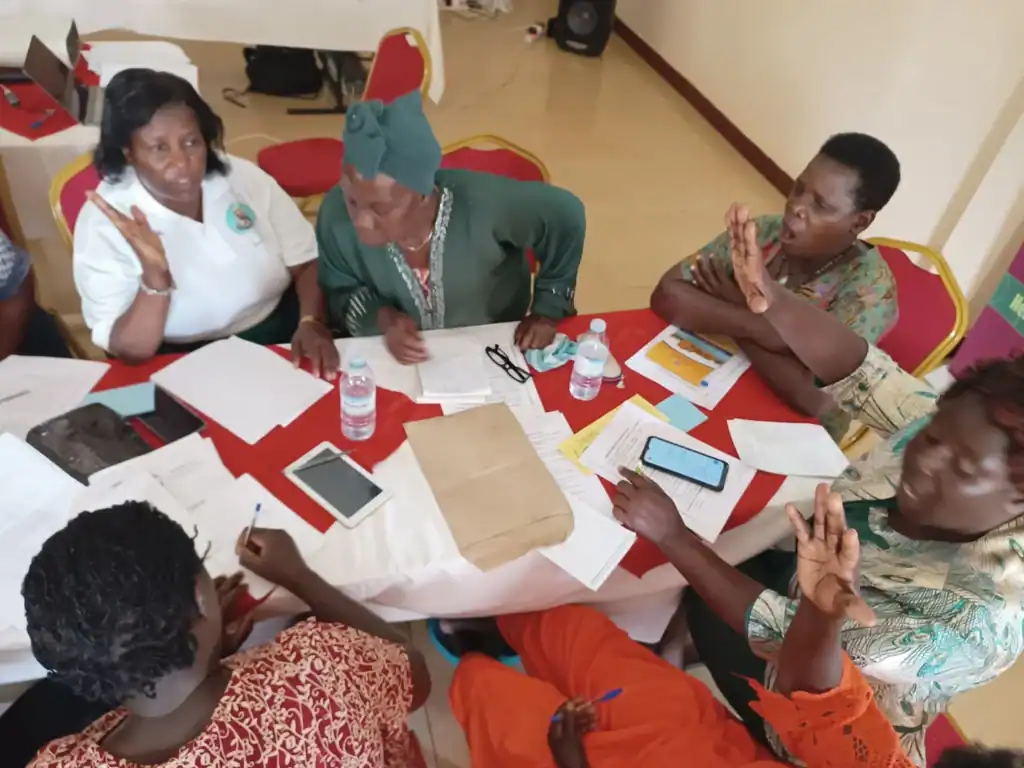
Co-creation turns lived experience into leadership. When we bring together a whole neighborhood to map their assets, we often find that the solutions are already there—they just need the right water resource management tools and shared ownership to flourish. Capacity building isn’t about teaching people what they lack; it’s about amplifying what they already have.
The Blueprint: Core Principles for Collaborative Action
How do we actually do this? It isn’t magic; it’s a process built on a few non-negotiable principles. Successful community initiatives—some of which have lasted over 20 years—all lean on these pillars:
- Shared Purpose: Everyone agrees on the “why.”
- Collaborative Action: Everyone has a job to do.
- Transparent Communication: No secrets about funding or plans.
- Continuous Learning: We fail fast, learn together, and adapt.
| Feature | Top-Down Aid | Co-Created Resilience |
|---|---|---|
| Leadership | Outside “Experts” | Local Residents & Women Leaders |
| Duration | Short-term (Project-based) | Long-term (Generational) |
| Knowledge | Academic/Technical only | Technical + Lived Experience |
| Funding | Rigid & Restricted | Flexible & Patient |
| Ownership | The Donor | The Community |
Aligning with Local History and Strengths
We cannot build resilience without acknowledging what a community has been through. In many parts of East Africa, communities face “Adverse Community Environments” (ACEs)—structural challenges like historical neglect or climate-driven displacement.
Effective co-creation is trauma-informed. It recognizes that trust is often low because of past “top-down” failures. By using the latest research on creating community resilience, we learn to align our initiatives with local history and indigenous knowledge. For example, in the Butambala District, traditional methods of predicting rain or managing shared land are often more accurate and culturally resonant than a generic weather app. We don’t replace that knowledge; we build on it.
The Role of Diverse Stakeholders
Co-creation is not just for institutions or a small group of leaders. It works best with a whole-community approach.
- Community Organizers: They build trust, connect neighbors, and help turn shared concerns into coordinated action.
- Youth Ambassadors: They bring energy, fresh ideas, and a real stake in what the future looks like.
- Municipal Leaders: They can connect community priorities to policy, budgets, and public infrastructure.
- Researchers: They help track what is changing, what holds up under stress, and what can be improved over time.
Our power lift model is designed to bring these groups together, ensuring that the burden of resilience doesn’t fall on just one pair of shoulders.
From Vision to Reality: Real-World Success Stories
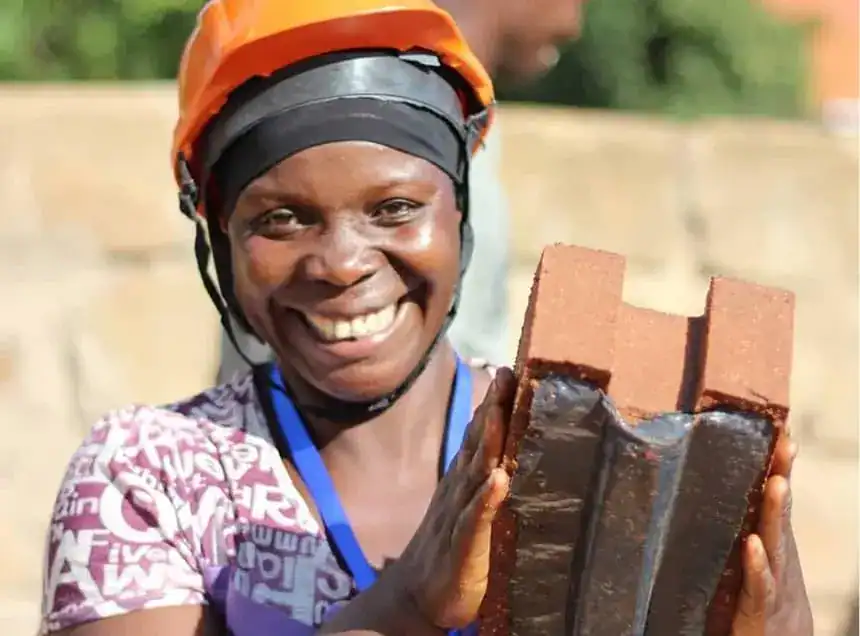
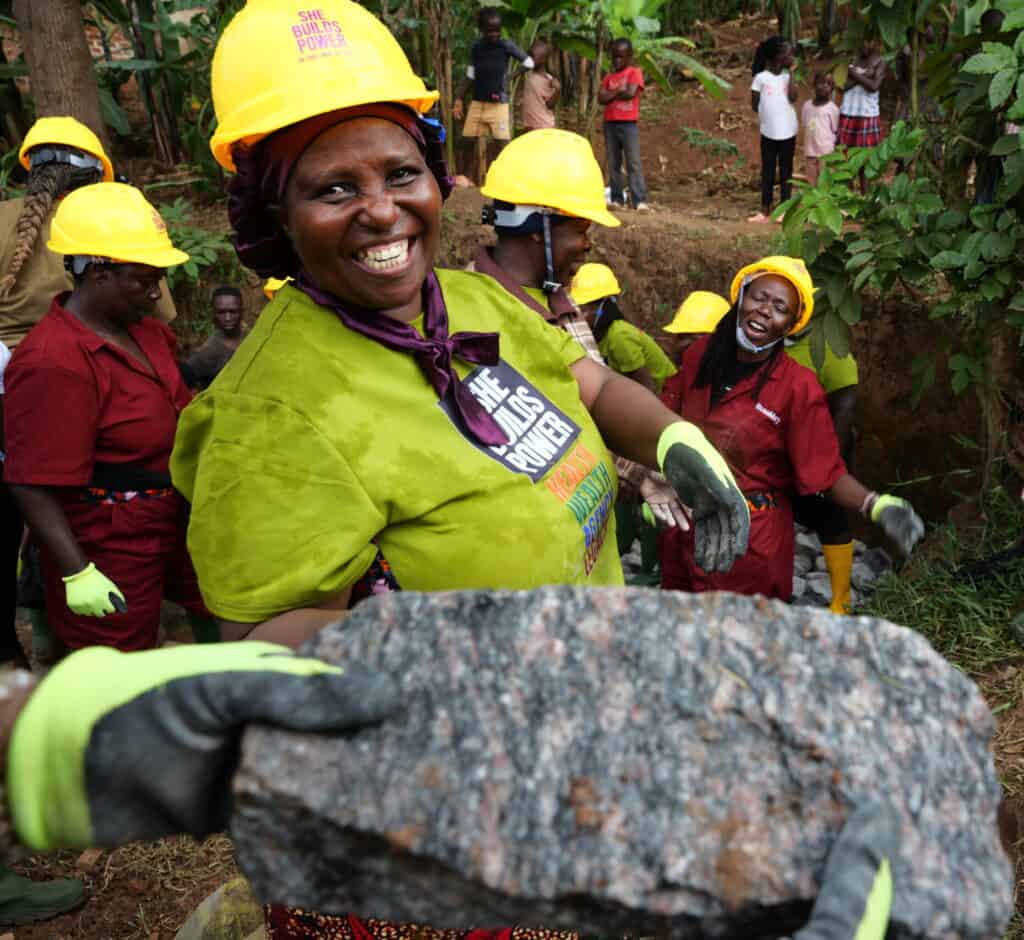
What does this look like on the ground? It looks like women-led resilience systems that strengthen the basics every community depends on: water, food, and finance. Instead of outside groups making all the decisions, local women are trained to lead practical solutions that fit their context, build household stability, and create the foundation for long-term resilience and generational wealth in Kenya and Uganda.
When we train a trainer, we are not just delivering information. We are building practical leadership so women can help design, implement, and sustain real solutions in their communities, turning local knowledge into action and shared ownership.
In one community, this looked like a women’s savings and loan group identifying, designing, and building a spring protection well. They combined their own group savings with community contributions and volunteer labor to make clean water reliably available to hundreds of households. That is what ‘virtuous cycle’ of resilience looks like: local people using shared resources, skills, and finance to create lasting solutions.
Scaling Impact Through Localized Networks
To move from a single village to an entire region, we need horizontal social infrastructure. This means connecting different community hubs so they can share resources and knowledge.
We work with women because research across disaster recovery, food systems, and local governance often shows that women are especially effective at building trust, sharing information, and organizing mutual support – not because women are all the same, but because they are often deeply embedded in family and community networks. When that collaborative energy is supported through Strengthening Capacity, Co-creating, Resourcing Local Actors, and Enhancing Networks (SCoRE), resilience no longer depends on one heroic leader. It lives in the group. If one person steps away, the relationships, knowledge, and systems remain – creating impact that can outlast a grant and keep serving the community for years.
Overcoming Structural Barriers to Co-Creating Community Resilience
Let’s be honest: co-creation is hard. It’s much easier to just write a check and walk away. The barriers are real:
- Power Imbalances: Sometimes the loudest voices in the room drown out the women who are actually doing the work.
- Short-Term Funding: Most donors want results in 12 months, but real resilience takes 10 years.
- Tokenism: Inviting a community member to a meeting just to check a box is not co-creation.
To overcome these, we need institutional reform. We need “patient capital”—funding that understands the long game. According to research on creating transformational resilience, we must move away from “pity-driven” narratives and toward “power-building” models that respect the autonomy of local actors.
Measuring Impact Through a Community Lens
How do we know if we’re winning? We don’t just count the number of pipes laid. We look at “reflexive co-production”—constantly asking the community, “Is this working for you? Who is being left out?”
We measure success by:
- Essential resources in women’s hands: Do women have reliable access to the water, food, finance, and tools they need to support their families and communities?
- Agency that goes beyond access: Are women making decisions, building income, and shaping local systems instead of being left out of them?
- Breaking cycles, building futures: Are families becoming more stable over time, with stronger livelihoods, greater resilience to shocks, and a real path toward generational wealth?
Policy and Funding for Scalable Change
We advocate for “proportionate universalism.” This means providing support for everyone, but with more intensity for those who have been historically marginalized.
By building horizontal social infrastructure—Resilience Coordinating Networks—we can begin linking local efforts to national policy. This ensures that when a woman in Siaya County develops a brilliant new way to manage water, food, and finance, her innovation can be shared with the rest of the country and the East Africa region.
Frequently Asked Questions about Co-Creating Community Resilience
How does co-creation differ from traditional community participation?
Traditional participation often means asking a community to “approve” a plan that has already been made. Co-creation means the community makes the plan from the very first day. It’s the difference between being a guest at a dinner party and being the chef in the kitchen.
What role do women play in building integrated community resilience?
Women are the primary managers of household water and food in most of our operating regions. Because they are the ones feeling the daily “pinch” of resource scarcity, they are the most effective designers of the solutions. When you support a trainee who is a woman, you are investing in someone who will naturally integrate water, food, and finance because that is how she already manages her life.
How can communities measure the success of co-created initiatives?
Success is measured by whether women and their communities can solve the next problem with growing confidence, ownership, and local power. We look beyond short-term outputs to the outcomes that matter most: health, wealth, agency, and legacy. That means tracking whether communities can sustain water systems, grow women-led livelihoods, respond to climate shocks, and keep building stability without waiting for outside rescue. The real metric is simple: are they breaking cycles of poverty and creating the conditions for generational wealth and long-term resilience?
Conclusion: Building Systems That Last
At She Builds Power, we don’t believe in “saving” people. We believe in building with them. Co-creating community resilience is the only way to ensure that the progress we make today isn’t washed away by the challenges of tomorrow.
By turning local knowledge into women-led systems, we are moving from a world of “beneficiaries” to a world of “builders.” We are replacing the fragile “well in a box” with a robust, integrated network of water, food, and finance that belongs to the people who use it.
The community is ready. The two heads (and the hundreds of others) are already talking. It’s time to give them the tools to lead.
Join the movement for Water, Food, and Finance and help us build power that lasts.