Water resource management: Essential 2025 Guide
Why Water Management Matters More Than Ever
Water resource management is the holistic approach to planning, developing, distributing, and managing water resources to balance competing demands—from drinking water and agriculture to energy production and ecosystem health—while ensuring both quantity and quality are sustained for current and future generations.
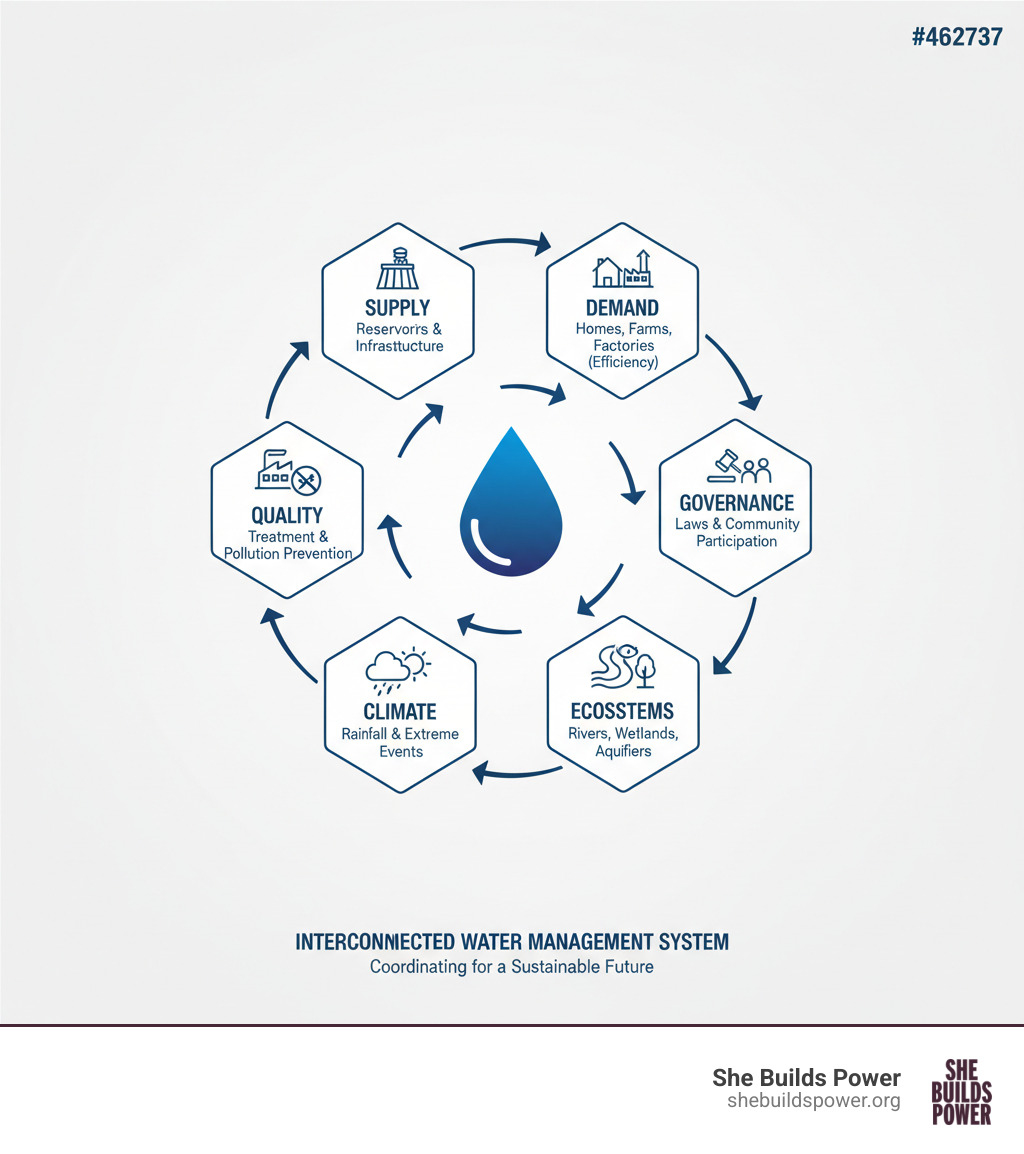
Key components of water resource management include:
- Supply Management: Developing infrastructure (reservoirs, wells, treatment plants) to capture, store, and distribute water
- Demand Management: Promoting efficiency and conservation to reduce water use across all sectors
- Quality Protection: Preventing pollution and treating water to meet health and environmental standards
- Governance: Establishing laws, policies, and institutions to coordinate water use fairly
- Ecosystem Preservation: Maintaining natural water systems (rivers, wetlands, aquifers) that support all life
Right now, our global water systems are spinning out of balance. 3.6 billion people face inadequate access to water at least one month per year—a number expected to surge to over 5 billion by 2050. Natural water storage has plummeted, and every day, 2 million tons of waste enter our rivers, lakes, and aquifers. Water-related disasters now account for 70% of deaths from natural hazards.
The hydrological cycle—the movement of water through our planet—is being disrupted by climate change and human activities. More frequent droughts, devastating floods, melting glaciers, and rising demand are creating a perfect storm of water stress.
Yet here’s the truth often missed in the headlines: water scarcity is rarely just a water problem. It’s a management, governance, and equity problem. Nearly half of the world’s rivers and aquifers cross national borders, yet only 24 countries have operational arrangements for all their shared basins. Fragmented laws, weak institutions, and inadequate investment have left us with systems that can’t meet today’s needs—let alone tomorrow’s.
But there’s power in understanding how water systems work and how communities can take charge of them. That’s where integrated, strategic water resource management comes in. It’s not just about building more dams or drilling more wells. It’s about coordinating across sectors, protecting natural systems, using data to make smart decisions, and empowering people—especially women—to lead.
I’m Gemma Bulos, and through She Builds Power, I’ve spent years training women in underserved communities to build integrated systems that bridge clean water, sustainable food, and local finance. Water resource management isn’t just technical—it’s about power, equity, and the foundation for lasting change.
The Global Water Crisis: Challenges and Pressures
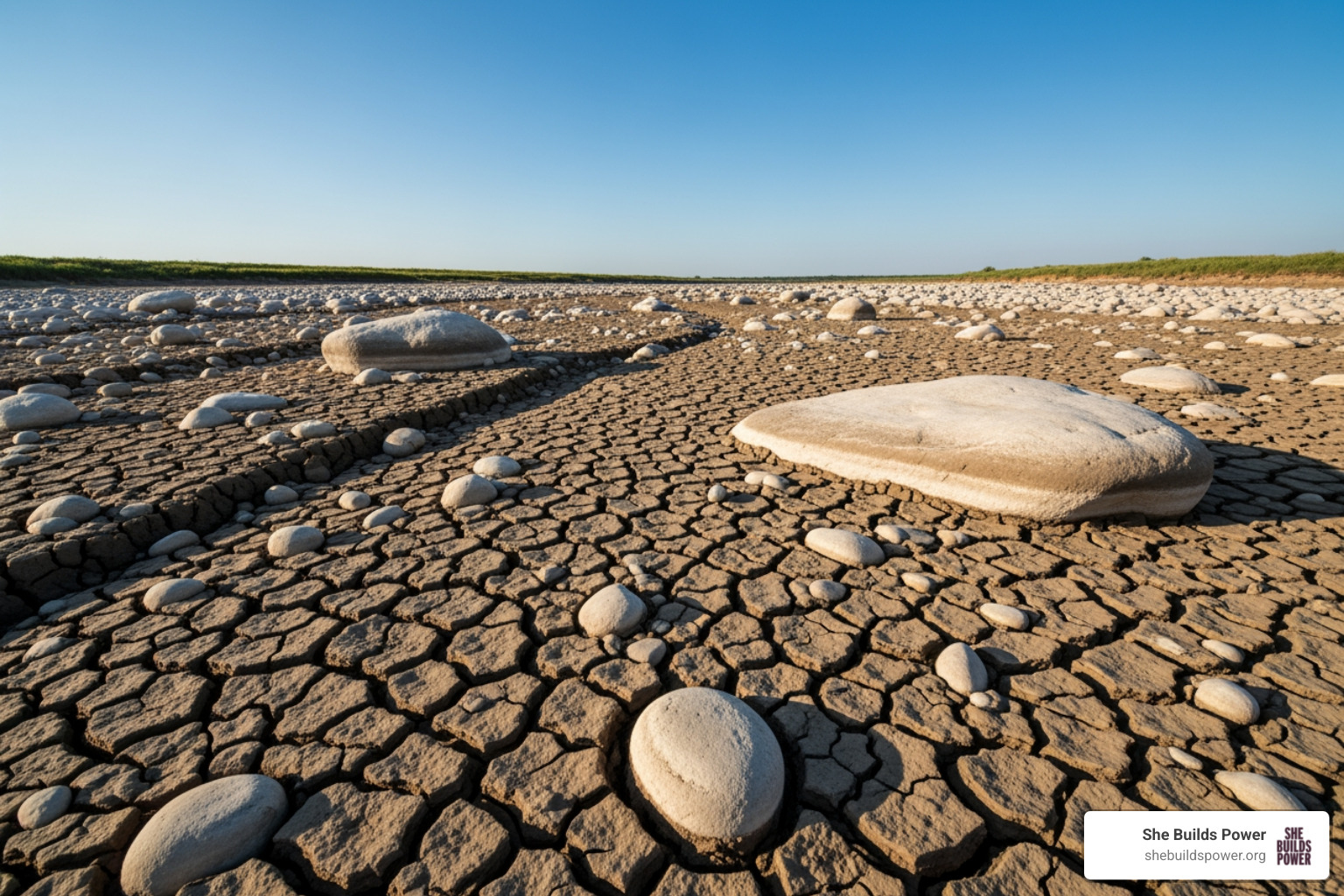
When I walk through communities in Uganda and Kenya, I see the water crisis up close—not as statistics, but as mothers walking miles for water, farmers watching crops wither, and children missing school because of waterborne illness. This isn’t a distant problem; it’s happening now, and it’s getting worse.
Here’s the reality: 3.6 billion people already face inadequate access to water at least one month per year. That’s nearly half the planet, a figure projected to exceed 5 billion by 2050. These aren’t just numbers—they’re families and communities struggling to meet their most basic need.
The pressures are mounting. Population growth and urbanization mean more people need more water where supply is already stretched thin. Cities, farms, and industries compete for the same finite resource. Worse, pollution is destroying the water we do have. Every day, 2 million tons of waste pour into our rivers, lakes, and aquifers—from agricultural runoff and industrial waste to untreated sewage.
The impacts of water stress are far-reaching, touching everything from health to economic stability. Effective water resource management is essential for survival.
Climate Change and Water Scarcity
Climate change is rewriting the rules of water. The hydrological cycle is being disrupted in real time, and the communities we work with live the consequences daily.
We’re seeing more extreme weather events, from devastating floods to prolonged droughts. These aren’t rare disasters anymore; they’re the new normal. Water systems in sub-Saharan Africa, including Uganda and Kenya, are already overburdened and can’t keep up.
The numbers are heartbreaking: water-related disasters now account for 70% of deaths from natural hazards worldwide as floods and droughts become more severe. Melting glaciers create short-term flood risks while threatening the long-term water security of billions who depend on glacial meltwater.
This disruption means we can no longer count on predictable rainfall or stable river flows. Every season brings uncertainty, making it incredibly difficult to plan for the future.
Declining Water Storage and Quality
Our planet has a natural water savings account in its soils, wetlands, and aquifers. But we’ve been draining this account at an alarming rate.
Over the past 50 years, natural water storage has declined by an astounding 27 trillion cubic meters. Groundwater depletion is especially concerning because it’s invisible. Yet groundwater supports 43% of global irrigation and nearly half of all domestic water use worldwide.
When these underground reserves run dry, they can take centuries to refill. Sometimes, aquifer degradation is permanent as rock formations collapse, eliminating storage capacity forever. The loss of wetlands, which naturally filter water and buffer against floods and droughts, makes the situation even more precarious.
The quality of our remaining water is also under assault. Agricultural runoff, industrial waste, and untreated sewage contaminate water, making it unsafe and harming ecosystems.
This is why water resource management must address both quantity and quality. You can have abundant water that’s too polluted to use, or pristine water that’s too scarce. We need both, and right now, we’re losing ground on both fronts.
Core Strategies for Effective Water Resource Management
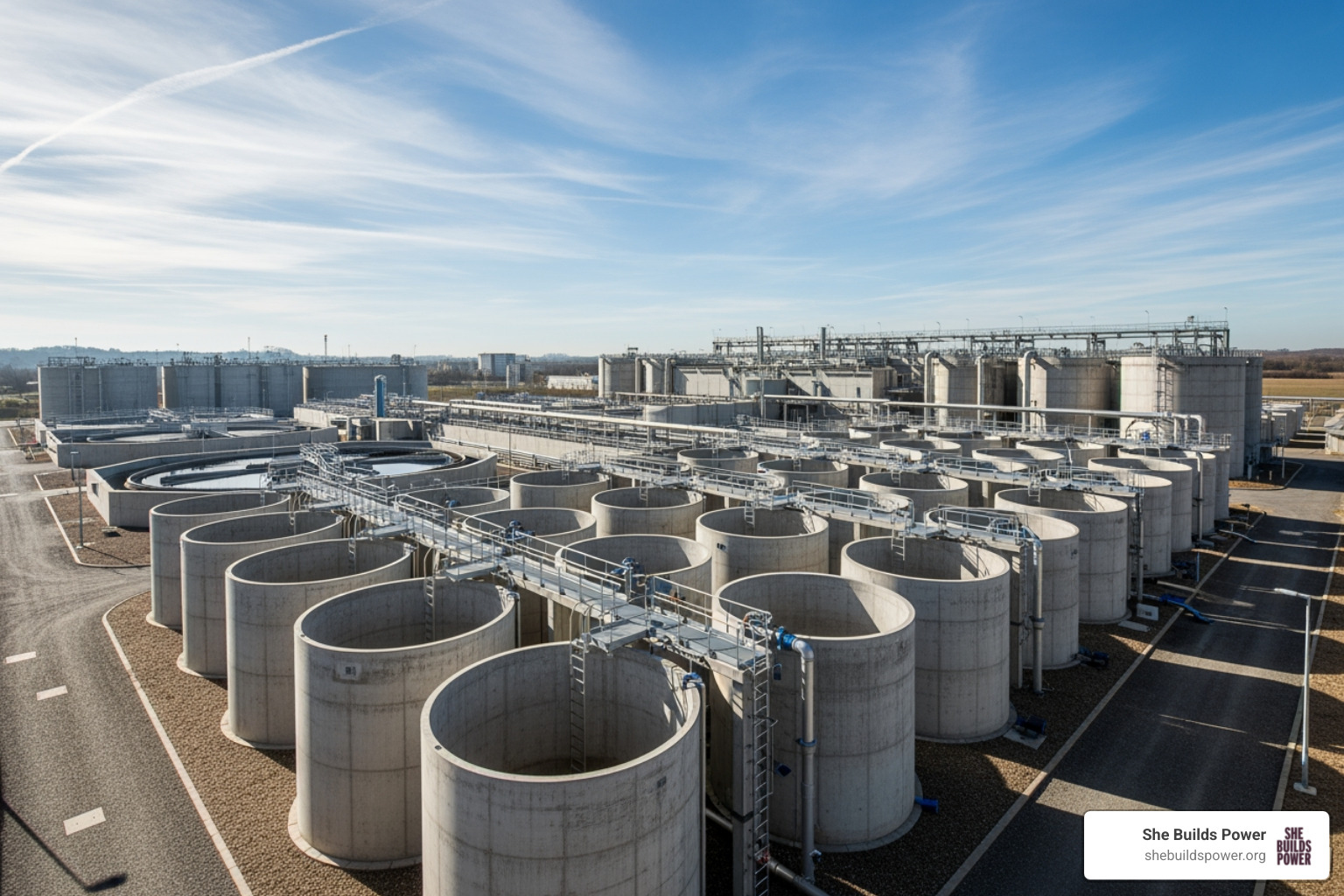
Here’s what I’ve learned working with communities in Uganda and Kenya: you can’t solve water problems with one-size-fits-all solutions. The global water crisis demands proactive planning and a systems approach that recognizes how deeply water is connected to everything else—food security, economic opportunity, health, and environmental resilience.
At She Builds Power, we’ve seen that the most powerful solutions integrate water, food, and finance together. When women understand how these systems connect, they can create lasting change in their communities. Learn more about our integrated approach.
The Principles of Integrated Water Resources Management (IWRM)
For decades, water was managed in isolated pieces. That fragmented approach no longer works. Integrated Water Resources Management (IWRM) brings all the pieces together, coordinating how we develop and manage water, land, and related resources across different sectors. The goal is to maximize economic and social benefits fairly, while keeping our ecosystems healthy.
This cross-sectoral approach is crucial in places like Uganda and Kenya, where a single river serves farmers, households, and wildlife. The United Nations Environment Programme (UNEP) champions IWRM globally, supporting countries to implement national water management processes and tracking progress through SDG indicator 6.5.1.
IWRM stands on four essential principles for effective water resource management:
Freshwater is a finite and vulnerable resource, essential to sustain life, development and the environment. We can’t take clean water for granted.
Water development and management should be based on a participatory approach, involving users, planners and policy-makers at all levels. The people who use water every day have invaluable knowledge.
Women play a central part in the provision, management and safeguarding of water. When we empower women to lead water solutions, we tap into an underestimated force for systemic change.
Water has an economic value in all its competing uses and should be recognized as an economic good. Understanding water’s true value helps communities make smarter choices about how to use and protect it.
Key Management Strategies and Tools
Effective water resource management requires a diverse toolkit. These approaches focus on managing demand, augmenting supply, and protecting quality.
Agricultural and urban water use efficiency is often the quickest win. Simple changes, like drip irrigation or fixing leaky pipes, dramatically reduce waste.
Conjunctive water management means coordinating surface water (rivers) with groundwater (aquifers). This involves using surface water during rainy seasons while aquifers recharge, then tapping groundwater during dry seasons to increase year-round reliability.
Recycled water is gaining traction as technology improves. Treating wastewater allows it to be safely reused for irrigation, industry, or replenishing groundwater, easing pressure on freshwater sources.
Pollution prevention focuses on stopping contamination before it starts. Preventing pollution at its source—through better farming and waste management—is far more effective than treating polluted water later.
Watershed management takes the broadest view, treating entire river basins as interconnected systems. This involves protecting forests, restoring wetlands, and managing land use to prevent erosion and improve water quality.
These strategies work best together, as demonstrated by a project in Uganda that improved water planning and expanded access for communities.
The Role of Technology, Data, and Monitoring
You can’t manage what you don’t measure. Technology and solid data are game-changers for water resource management. Hydrological assessments give us a baseline of how much water is available and how patterns are changing.
When data is shared between local communities, regional agencies, and national governments, everyone can make better decisions. Tools like remote sensing, GIS, and modeling help us track resources and assess risks with greater accuracy. The World Meteorological Organization’s HydroSOS system, for example, will monitor and forecast freshwater conditions worldwide, giving communities in Uganda and Kenya crucial time to prepare for droughts or floods.
Organizations in sub-Saharan Africa are using systems that integrate data and models to provide actionable, local information. Smart water grids and real-time monitoring can detect leaks and optimize distribution. The beauty of these technologies is their growing accessibility, empowering communities to make data-informed decisions and create lasting change.
Governance, Collaboration, and People Power

Here’s a truth I’ve learned working with communities across Uganda and Kenya: the most brilliant technical solution means nothing if people don’t have a voice in how it’s implemented. Effective water resource management isn’t built on pipes and pumps alone—it’s built on people, policies, and partnerships that actually work for the communities they serve.
The Importance of Strong Governance and Institutions
Think about it: even the best water system will fail without clear rules about who gets water, when, and how much. That’s where governance comes in. Strong institutional frameworks, clear legal policies, and transparent planning aren’t bureaucratic obstacles—they’re the foundation that makes everything else possible.
The problem is that water management laws and institutions are often fragmented. Different agencies focus on narrow objectives without talking to each other. One department manages drinking water, another handles irrigation, and yet another oversees industrial use—all without coordination. This creates inefficiencies, conflicts, and gaps, especially when watersheds cross jurisdictional boundaries.
For the communities we work with in Uganda and Kenya, strengthening governance means establishing clear regulations that everyone understands. It means transparent planning processes where decisions aren’t made behind closed doors. It means creating sustainable financial mechanisms so water systems don’t collapse when donor funding ends.
Basin-level governance is particularly powerful. Instead of managing water piecemeal, you manage the entire river basin holistically—from the mountains where rain falls to the plains where it’s used. This ensures fair allocation and sustainable use across all communities that depend on that water source.
At She Builds Power, we’ve seen that effective governance at all levels is key to breaking poverty cycles. When women are empowered to participate in decision-making and create systemic change, the impact is profound and lasting. You can see the tangible results of this approach in the impact of our work.
Transboundary Water Cooperation
Water doesn’t care about borders. Nearly half of the world’s rivers and aquifers cross national boundaries, flowing from one country into another without stopping at checkpoints. This makes transboundary water cooperation essential—yet incredibly challenging.
In regions with shared water sources, cooperation isn’t just nice to have; it’s vital for preventing conflict and ensuring everyone gets their fair share. When one country builds a dam upstream, it affects everyone downstream. When pollution enters a river in one place, it travels everywhere the water goes.
Yet here’s the sobering reality: only 24 countries have operational arrangements for all their shared basins. That means most of the world’s shared water resources are being managed without formal cooperation agreements.
Establishing institutions, legal frameworks, and financing solutions for jointly managing transboundary waters is critical. This includes developing basin organizations where countries work together, creating benefit-sharing arrangements that ensure everyone wins, and building cross-border investment strategies. As water demand rises and climate variability intensifies, cooperation becomes even more essential to reduce conflict, build resilience, and ensure long-term sustainability. There are compelling reasons to scale up transboundary cooperation, and the time to act is now.
Regional Challenges and Public Participation in Water Resource Management
The beauty and the challenge of water resource management is that there’s no one-size-fits-all solution. What works in a busy urban center looks completely different from what works on a farm or in an arid region.
In rapidly growing urban areas across Uganda and Kenya, the focus is on expanding access to safe drinking water and sanitation services. Cities need to manage urban stormwater runoff and upgrade aging infrastructure that’s struggling to keep pace with population growth. A World Bank project in Uganda showed what’s possible: over 1 million people gained access to improved water sources through strategic urban investments.
In agricultural areas, where groundwater supports 43% of global irrigation, the priorities shift. Farmers need water-efficient irrigation techniques that produce more crops with less water. Communities need strategies to manage agricultural runoff so pesticides and fertilizers don’t pollute drinking water sources. Conjunctive use—coordinating surface water and groundwater—helps ensure reliable supply even during dry seasons.
In arid and semi-arid regions like Butambala District in Uganda, communities face chronic water scarcity. Here, innovation becomes survival. Rainwater harvesting captures every precious drop. Water reuse systems make water work twice. Efficient allocation ensures the most critical needs are met first.
But here’s what ties all these regional approaches together: public participation and stakeholder engagement. These aren’t just buzzwords—they’re the difference between systems that work and systems that fail.
The IWRM principle that water management should involve users, planners, and policymakers at all levels isn’t theoretical. It’s practical wisdom. When communities are involved in decision-making, they take ownership. When women—who often bear the primary responsibility for water collection—are empowered to lead, solutions become more effective and equitable.
I’ve seen this firsthand. Community-led initiatives for building inclusive management for sustainable rural water access in Kenya demonstrate the power of local ownership. Private water management initiatives advancing services in Siaya County, Kenya, show how diverse partnerships can drive change.
When people participate democratically in managing their water resources, economic, social, and environmental considerations all get a seat at the table. The solutions that emerge truly serve the people—not just on paper, but in their daily lives. This is the kind of systemic change that lasts, the kind that breaks poverty cycles and builds power from the ground up.
Frequently Asked Questions about Water Management
You’ve made it this far, and I know you might still have some questions. Let me answer the most common ones we hear from communities, partners, and supporters.
What are the three main components of water resource management?
Think of water resource management as a three-legged stool—each leg is essential for balance. The first leg is managing water demand, which means helping communities and farms use water more efficiently through conservation and smart practices. The second leg is augmenting water supply—finding ways to increase available water through storage, recycling, and in some cases, desalination. The third leg is protecting water quality, which involves preventing pollution at its source and treating water to make it safe.
The beauty of this approach is that all three legs work together. When we reduce demand through efficiency, we ease pressure on supply. When we protect quality, we ensure that the water we do have remains usable. The goal isn’t just to have enough water—it’s to ensure sustainable and equitable access for everyone, including the ecosystems that support all life.
How can we manage water resources effectively?
Effective management starts with seeing the whole picture. That’s why we rely on an integrated approach (IWRM) that considers all water uses and all water users—from the farmer irrigating her crops to the child filling a cup at school to the wetland that filters pollution and supports wildlife.
In practice, this means several things working together. We need robust data monitoring so we know what’s actually happening with our water resources—you can’t manage what you don’t measure. We implement both green infrastructure (like protecting wetlands and forests) and grey infrastructure (like wells and treatment facilities). We promote water-use efficiency across all sectors, invest in new technologies that help us track and manage water better, and establish strong governance and legal frameworks that make clear rules everyone can follow.
But here’s what I’ve learned through She Builds Power: the most critical piece is public participation. When communities—especially women—are involved in decision-making, the solutions stick. They’re locally relevant, culturally appropriate, and sustainable because people take ownership of them.
Why is water management a critical global issue?
Water is life. It’s that simple and that profound. Without clean, accessible water, nothing else works. We can’t grow food, produce energy, maintain health, or build thriving economies. Water is the foundation beneath everything.
Right now, with a growing global population, increasing pollution (remember those 2 million tons of waste entering waterways daily?), and the unpredictable impacts of climate change, billions of people face water scarcity. This isn’t a problem that stays contained. Poor water resource management leads to conflict between communities and countries, spreads disease, destroys ecosystems, and keeps people trapped in poverty.
That’s why sustainable water management is a cornerstone of global stability and prosperity. It’s why it’s one of the UN’s Sustainable Development Goals. And it’s why at She Builds Power, we see water as one of our three pillars of power—alongside food and finance—because when women lead integrated water systems, they create ripples of change that transform entire communities.
Conclusion: Charting a Sustainable Water Future
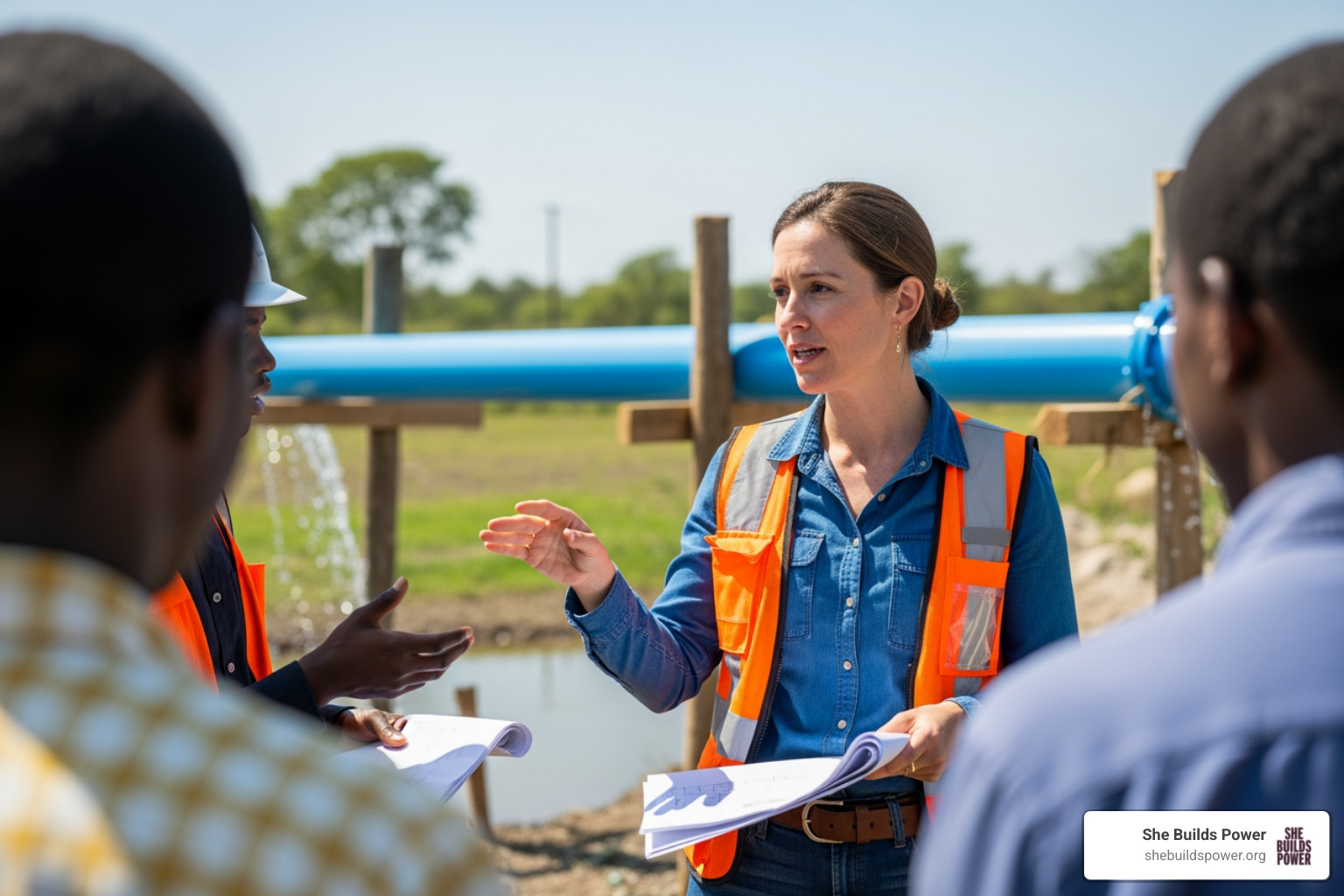
The road ahead for water resource management isn’t an easy one, but it’s a journey we must take together. We’ve seen the challenges: billions of people facing water scarcity, climate change throwing our hydrological cycles into chaos, pollution choking our rivers and aquifers. The numbers can feel overwhelming. But here’s what I’ve learned working with communities across Uganda and Kenya: the solutions already exist. We know what works.
Integrated approaches that connect water, food, and finance. Technology and data that help us make smarter decisions. Strong governance that ensures fairness and transparency. Cooperation across borders and sectors. These aren’t just theories—they’re proven strategies that are already changing lives.
Organizations like the World Bank, UNEP, and WMO are doing critical work, promoting monitoring systems, building capacity, and creating frameworks for sustainable hydrology. The WMO’s long-term ambitions for hydrology focus on preparing for floods and droughts, improving data quality, advancing scientific research, and supporting Sustainable Development Goal 6. These global efforts matter enormously.
But I’ve seen that the most powerful solutions don’t come from the top down—they come from the ground up. When communities take ownership of their water systems, when local knowledge drives innovation, when the people most affected by water challenges become the architects of change, that’s when real change happens.
And when women lead that change? Everything changes. Women understand the daily realities of water scarcity in ways that often go unrecognized. They know which water sources are reliable, which times of day are safest for collection, how much water a family truly needs. They see the connections between clean water, healthy children, productive gardens, and economic opportunity. This isn’t just about inclusion—it’s about tapping into an underestimated force that can create systemic change and break poverty cycles.
At She Builds Power, we’ve built our work on this truth. We don’t just train women to manage water systems. We empower them to lead integrated solutions that address water, food security, and financial stability together. Because water security isn’t just about pipes and pumps. It’s about power, equity, and building the foundation for communities to thrive.
The future of water on our planet depends on all of us—governments investing in infrastructure and policy, international organizations coordinating global efforts, communities taking charge of local solutions, and individuals making conscious choices about water use. It’s about recognizing that we share this precious resource and that our collective responsibility extends beyond borders and generations.
A water-secure future is possible. It requires courage, innovation, and collaboration. But most of all, it requires us to recognize and support the leaders who are already building it in their communities. Join us in building a water-secure future. Because when we empower women to lead in water resource management, we’re not just solving a water crisis—we’re changing entire communities and creating lasting change that ripples outward for generations to come.