What Do We Really Mean When We Say “Empower”?
I’ve been using the word empowerment for years.
Like many people working in international development and social impact work, I’ve used it in proposals, presentations, strategy meetings, and conversations about the future we hope to build. It’s a good word. As it relates to our work, it reflects a world where women and girls have greater opportunities, stronger voices, and more influence over their own lives.
Lately, though, I’ve found myself hesitating before I use it. Not because I disagree with it. But because I’ve started asking myself a surprisingly simple question.
What do we actually mean when we say we empower women?
Do we mean we transfer power? Do we create it? Do we unlock it? Do we recognize it? Or do we expand women’s ability to exercise it?
The more I unpacked the word empower, the more I realized I first needed to unpack the word power.
Because perhaps the challenge isn’t the word empowerment. Perhaps it’s that we’ve been talking about power as though it’s a single thing.
After twenty years working alongside women across Africa and Asia, I don’t think it is.
Power isn’t hierarchy. I think power is an ecosystem.
There is structural power—the authority to make decisions, influence policy, own land, access education, control financial resources, and shape institutions.
There is knowledge power—the ability to solve problems, innovate, teach, and apply experience.
There is economic power—the freedom that comes from financial security, access to capital, and the ability to invest in the future.
There is relational power—the trust to bring people together, mobilize communities, build partnerships, and influence through relationships.
And there is human power—the creativity, courage, determination, and imagination that allow us to act, even when circumstances suggest we shouldn’t.
These forms of power are different. None is inherently more important than another. And perhaps most importantly, none exists in isolation.
Knowledge can create economic opportunity. Economic opportunity can strengthen influence. Relationships can open doors to institutional change. Institutional change can create opportunities for millions of girls who follow.
Like any ecosystem, each form of power strengthens the others.
Or limits them.
I’ve met women with extraordinary knowledge but little authority to use it. Women with remarkable business acumen but no access to capital. Women who solve complex problems everyday, but no seat at the decision-making table. Women with undeniable leadership, but systems that rarely recognize it. I’ve met girls with an insatiable curiosity for science who never had the opportunity to study it.
The issue wasn’t whether they had power. The issue was which forms of power were recognized, which were constrained, and which had the opportunity to grow.
That distinction has quietly changed the way I think about development.
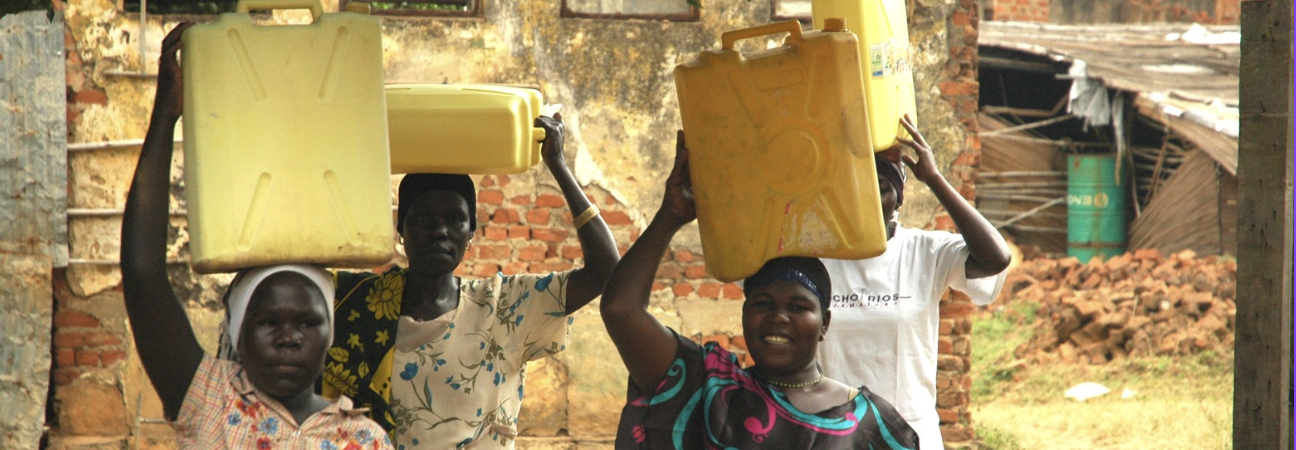
Too often, our work begins by asking what women lack.
What skills are missing?
What resources aren’t available?
What capacity needs to be built?
Those are important questions. But lately I’ve been wondering if they’re incomplete. What if our first question was different?
What if we ask instead, what power already exists here?
What knowledge has gone unnoticed?
What leadership has never been acknowledged?
What relationships already hold this community together?
What ideas have never been funded?
What girl has quietly demonstrated the mind of an engineer but never been given the opportunity to become one?
One observation has stayed with me throughout my career.
People with the least resources are often the most resourceful.
Not because scarcity is somehow a gift. No one should have to struggle simply to prove how creative or resilient they can be. But because constraints demand a kind of ingenuity that abundance rarely asks of us.
I’ve watched women engineer gravity-fed water systems, not because they were born knowing how to calculate slope, pressure, or flow, but because they brought something just as important: curiosity, discipline, and a lifetime of solving problems with too few resources.
I’ve watched women learn to manage loans, track repayments, organize savings groups, negotiate construction projects, and build businesses that transformed entire communities.
The technical skills mattered. They had to be taught, practiced, and strengthened.
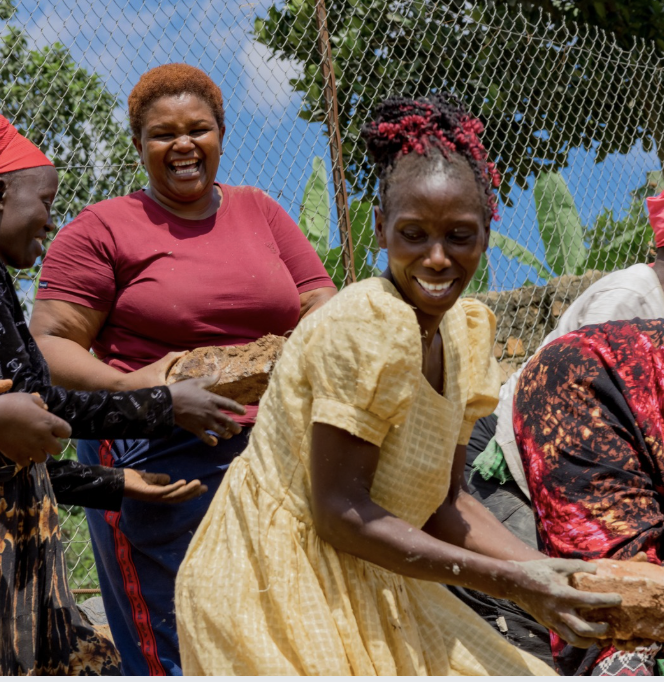
But the capacity to learn them was already there. So was the resourcefulness. The creativity. The resilience. The desire to build something better.
What they lacked wasn’t intelligence or capability. It was access to the training, tools, capital, and opportunities that allowed those abilities to emerge.
Perhaps that’s why I’ve started hearing the word empower differently.
Some forms of power can, and should, be shared. A scholarship expands educational power. Property rights expand economic power. Leadership opportunities expand institutional power.
Those transfers matter. They change lives. But they don’t create intelligence, ingenuity. or leadership. That potential already exists.
Maybe empowerment is the destination.
And perhaps the journey begins by recognizing the many forms of power women and girls already possess—and then intentionally expanding the opportunities, resources, influence, and authority that allow those forms of power to grow together.
That journey is what I’ve started calling Up-Powerment.
Not because power moves in only one direction. Or because women need to climb higher in someone else’s hierarchy.
But because so much power has been pushed down, overlooked, underfunded, and unnamed.
I definitely don’t think the development sector needs another buzzword. But because I needed language that better described what I’ve been privileged to witness over the last two decades.
Up-Powerment is not about moving women up someone else’s hierarchy. It is about creating the conditions for existing power to emerge, connect, and rise.
I’m still exploring the idea. This isn’t a conclusion.
It’s an invitation to a conversation.
Because if power is an ecosystem rather than a hierarchy, perhaps we need to rethink not only how we empower women and girls…
…but explore what we mean by power in the first place.
I’d love to hear what you think.