Leading the Way: A Guide to Siaya’s Female Trailblazers
When we look at the current state of Siaya County leadership women, we see a landscape defined by immense potential but limited numerical representation. Currently, the political weight of elected female leadership in Siaya rests largely on the shoulders of one person: Dr. Christine Ombaka. As the County Woman Representative, she stands as the sole woman elected by the people of Siaya to represent them at the national level.
This creates a significant contrast when we look across the border at our neighbors. In Homa Bay County, the electoral culture has shifted toward a more inclusive model. Homa Bay boasts five elected women in high-level positions, including three Members of Parliament and a female Governor. This disparity isn’t just a matter of “counting heads”; it represents a difference in how regional development is prioritized and executed.
The pioneering role of Gladys Wanga in Homa Bay serves as a powerful case study for what is possible. By moving from the Woman Representative seat to the Governor’s office, she proved that women are not restricted to affirmative action seats—they are capable of leading entire county executives. In Siaya, the journey toward this level of representation is still in its “powerbuilding” phase, where we are moving from individual trailblazers to a collective movement of systems-builders.
Breaking the Solitary Ceiling in Siaya County Leadership Women
Being the only woman in a room of elected male leaders is a challenge Dr. Ombaka has navigated for over a decade. This “solitary ceiling” often leads to political isolation, where the specific needs of women—ranging from maternal health to market infrastructure—can be sidelined in favor of traditional “big-man” politics.
However, leadership isn’t just about presence; it’s about legislative advocacy. Despite the isolation, women in the Siaya County Assembly leadership and at the national level have fought to ensure that the female voice is heard in budget cycles and policy drafting. We believe that for Siaya to thrive, we must move beyond the “token” female leader and integrate women into every layer of the Siaya County Assembly, from committee chairs to ward representatives.
Lessons from the Homa Bay Model
Why is Homa Bay often cited as being “ahead” of Siaya in certain development metrics? According to Dr. Ombaka, the answer lies in the diversity of its leadership. With figures like Millie Mabona, Dr. Eve Obara, and Lilian Gogo serving as MPs, alongside Governor Wanga and Woman Rep Bensuda, Homa Bay has a “critical mass” of female leaders.
This density of leadership allows for a more holistic approach to community issues. While one leader might focus on education, another focuses on healthcare, and a third on infrastructure. In Siaya, the burden of representing all “women’s issues” falls on one office. The “Homa Bay Model” proves that electing more women leads to a regional development edge because women naturally gravitate toward solving the root causes of poverty—water access, food security, and family finance.
Economic Powerbuilding: Markets and Infrastructure
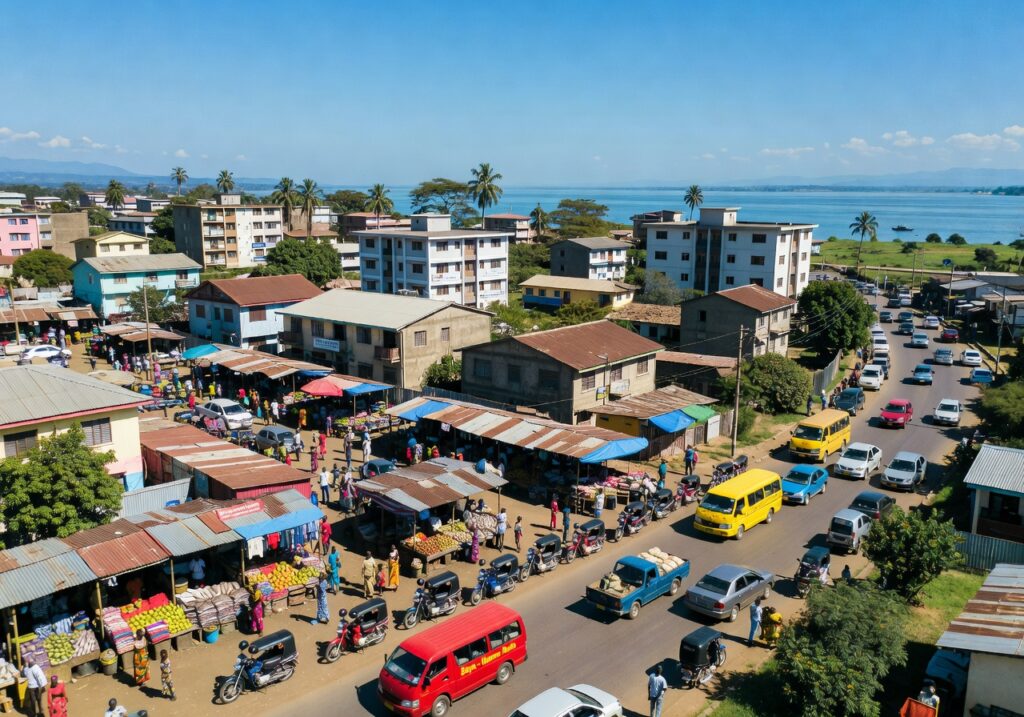
At She Builds Power, we don’t view a market as just a place to buy and sell. We see it as a vital node in an integrated community system. In Siaya, Siaya County leadership women have prioritized these spaces because they are the primary engines of the local economy for women.

The construction of the Kamito Market is a prime example of this vision. With an investment of KSh7.2 million, this modern facility provides 120 stalls, giving women a dignified, safe, and weather-proof environment to conduct trade. Before this, many traders were at the mercy of the elements, losing produce to rain or heat. By building this infrastructure, leaders are directly addressing the importance of women in food security, ensuring that the supply chain from farm to table remains unbroken.
Scaling Impact through Siaya County Leadership Women
The Kamito project isn’t an isolated event. Over the last ten years, Dr. Ombaka has overseen the construction of 12 modern market shades across Siaya’s sub-counties. This is what we call scaling impact. By focusing on sub-county development, leadership ensures that economic inclusion reaches the “last mile”—the rural woman who previously had no access to a formal trading floor.
These markets are more than buildings; they are hubs where women-led systems take root. When a woman has a stable place to trade, she has a stable income. When she has a stable income, she can invest in her children’s education and her family’s health. This is the measurable impact of women-led systems that we champion—turning a physical stall into a foundation for long-term resilience.
Overcoming Barriers to Siaya County Leadership Women
If the benefits of women’s leadership are so clear, why aren’t there more women in office? The research points to several structural and cultural hurdles. One major obstacle is land disputes. Many development projects, including markets, have been stalled for years because of disagreements over land ownership—a sector traditionally dominated by men.
Furthermore, internal party challenges within dominant parties like ODM can make it difficult for women to secure nominations for “unreserved” seats (like MP or Governor). Cultural hurdles also persist, where some segments of the electorate still view leadership as a male domain. To overcome this, Dr. Ombaka and other advocates have proposed strategies for electing more women, including early grassroots mobilization and resolving internal party frictions through dialogue.
Navigating the 2027 Political Landscape
As we look toward the 2027 elections, the goal is clear: Siaya must move beyond the single Woman Representative seat. The aspirations of current and aspiring Siaya County leadership women are focused on elective seats at the constituency level.
We are seeing a shift where women are no longer asking for permission to lead; they are building the economic and social capital needed to win MP positions and even gubernatorial races. This requires a shift from charity-based politics to powerbuilding—equipping women with the agency to lead their own campaigns and design the solutions their voters are looking for.
From Access to Agency: The Role of Affirmative Action
Affirmative action is often misunderstood as a “handout.” In reality, funds like the National Government Affirmative Action Fund (NGAAF) are essential tools for powerbuilding. In Siaya, these funds have been used to disburse cheques to women’s groups, providing the seed capital needed for microenterprises and poverty alleviation.
At She Builds Power, we emphasize that about our powerbuilding model, it’s not just about the money—it’s about the agency. When a women’s group receives a grant, they aren’t just “receiving aid”; they are becoming managers of a financial system. They learn financial literacy, collective decision-making and group enterprise, and project management.
Strengthening Integrated Community Systems
True resilience comes from connecting the dots. A woman with a market stall needs water to keep her produce fresh and a financial group to save her profits. This is why we focus on strengthening integrated community systems.
Whether it is improving water access for irrigation or providing training in climate-resilient farming, the goal is to create a web of support. We see this in Amina’s story of building power, where a single intervention in water access transformed her entire community’s ability to produce food and generate income. When Siaya County leadership women apply this systems-thinking to governance, the entire county wins.
Frequently Asked Questions about Siaya Women Leaders
Why does Homa Bay have more women leaders than Siaya?
The difference is largely due to a shift in voter perception and a history of strong political activism among women in Homa Bay. Leaders like Gladys Wanga have acted as mentors, creating a “pipeline” for other women. In Homa Bay, the electorate has seen the tangible development benefits of female leadership, which has made it easier for subsequent women to win elective seats.
What projects has the Siaya Woman Representative implemented?
Dr. Christine Ombaka has focused heavily on economic infrastructure. Her key achievements include the construction of 12 modern market shades across the county, including the KSh7.2 million Kamito Market. She has also used NGAAF funds to support women’s groups with financial grants, provided educational bursaries, and advocated for the rights of the girl child in the national assembly.
How can more women secure elective seats in Siaya?
Securing more seats requires a multi-pronged approach:
- Dialogue: Resolving internal party issues within major political parties to ensure fair nomination processes.
- Community Advocacy: Shifting the cultural narrative through grassroots engagement to show that women are effective “systems-builders.”
- Economic Empowerment: When women have financial independence, they have the resources to run competitive political campaigns.
Conclusion
The story of Siaya County leadership women is still being written. While the current numbers may be small, the impact of trailblazers like Dr. Christine Ombaka shows that women don’t just occupy space—they build the systems that sustain us.
At She Builds Power, we are committed to moving beyond fragmented aid. We believe that by training women to lead at the intersection of water, food, and finance, we are creating a new generation of leaders who don’t just wait for change—they build it. As we look toward the future, the goal is to see a Siaya where women lead in every ward, every constituency, and every department of the county government.
When we transform access into agency, we don’t just help one person; we build a system that lasts for generations. Join us as we continue to build power through food security and systems-change across Siaya and beyond. Together, we are not just observers of history; we are the builders of a resilient future.