Empowering Butambala with Local Initiatives
Why Rural Women Economic Empowerment Is the Most Powerful Investment You Can Make
Rural women economic empowerment is the process of expanding women’s access to resources, income, leadership, and decision-making power so they can build lasting stability for themselves, their families, and their communities.
Here is what it looks like in practice:
| Pillar | What It Means |
|---|---|
| Economic access | Land rights, credit, savings, and fair markets |
| Skills and training | Agriculture, finance, business, and technology |
| Leadership and voice | Decision-making in households, cooperatives, and governance |
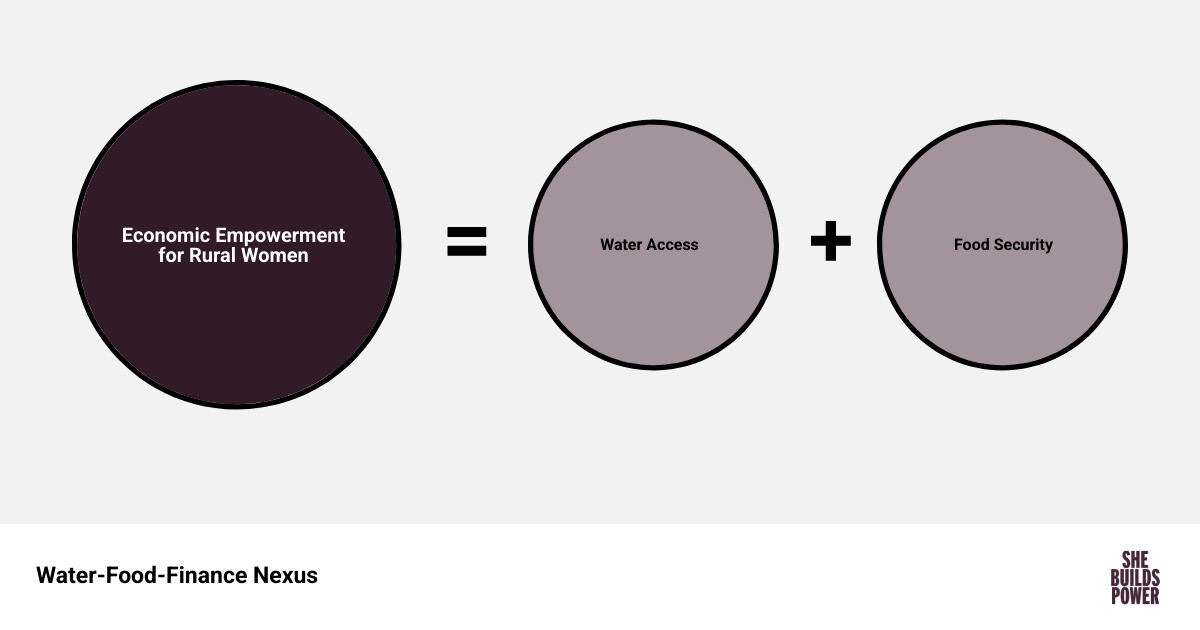
| Integrated systems | Water + food + finance working together, not separately |
| Social norms shift | Communities that support — not block — women’s progress |
Rural women make up a significant share of the world’s agricultural workforce. They grow food, manage households, and hold communities together. Yet they consistently face restricted access to land, credit, healthcare, education, and markets — barriers made worse by climate change, economic shocks, and conflict.
The gap between what rural women already do and what they could achieve with the right support is not a small gap. It is the distance between a community that just survives and one that thrives.
When women have water, food, and finance solved together — families and communities have more opportunities and the power to rise.
This is not a “women’s issue.” It is a development strategy. Every dollar invested in a rural woman ripples outward — into her children’s nutrition, her neighbor’s business, her village’s resilience.
I’m Gemma Bulos, founder of She Builds Power, and I’ve spent years training women to build and lead integrated community systems that connect clean water, sustainable food, and local finance as a unified path to rural women economic empowerment. The sections ahead lay out exactly how this works — from global evidence to local action.
The Blueprint for Rural Women Economic Empowerment
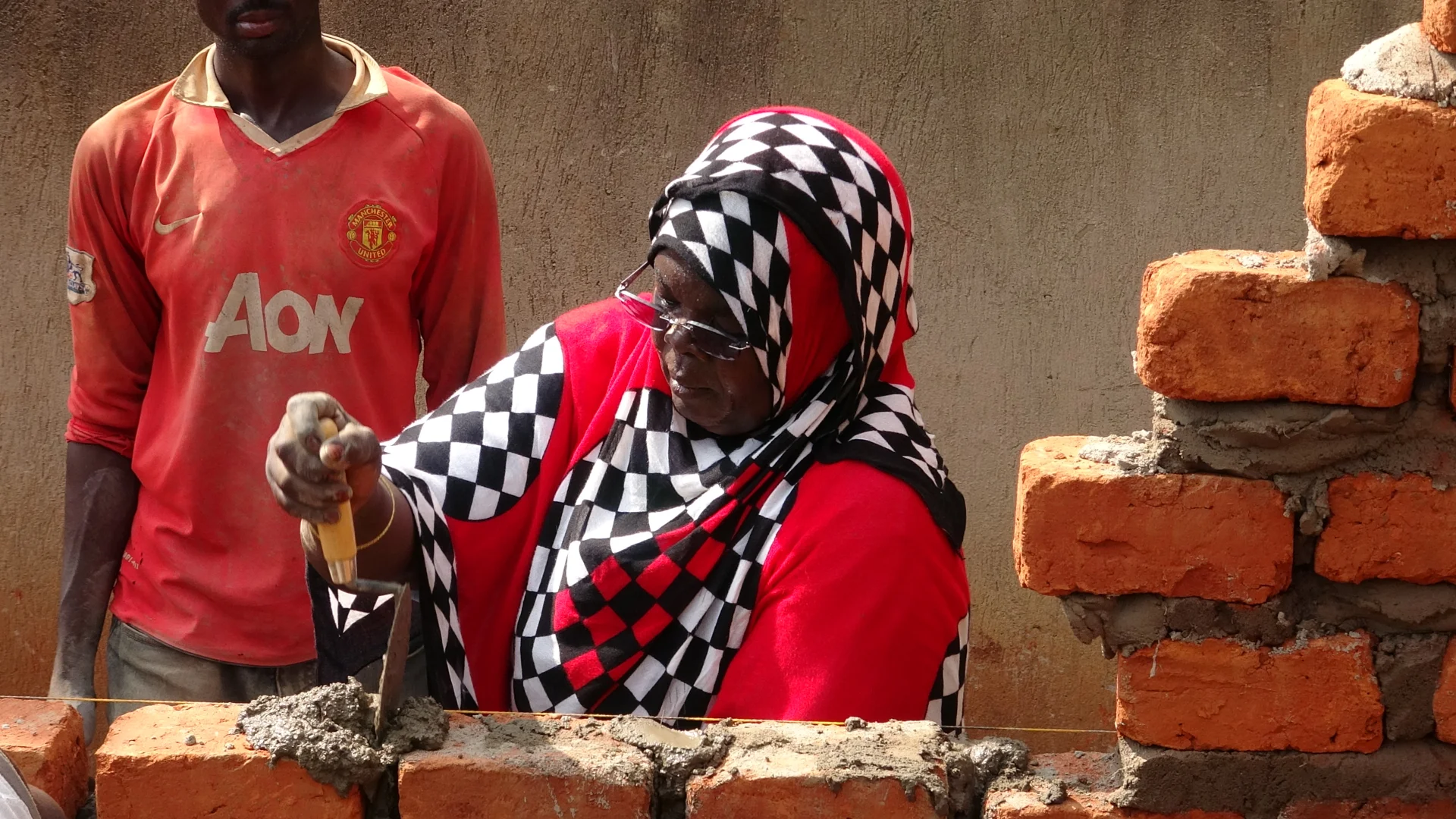
At She Builds Power, we don’t see women as passive recipients of aid. We see them as the architects of their own future. The blueprint for rural women economic empowerment requires a fundamental shift from providing “access” to building “agency.”
Agency is the ability to make choices and transform those choices into desired outcomes. In places like Butambala District and Siaya County, this means moving beyond a single training session or a one-time grant. It requires structural change that addresses the root causes of poverty, not just the symptoms.
One of the most critical root causes is the lack of control over productive assets. When women lack secure land rights or financial literacy, they cannot invest in the long-term health of their farms or businesses. By focusing on Importance of Women in Food Security, we recognize that women are already the primary food producers. Empowering them with modern tools and decision-making power isn’t just a nice thing to do—it’s the only way to achieve sustainable development.
Our approach targets the “Powerbuilding” category. We help women design and sustain the solutions their communities rely on. This breaks the cycle of poverty because it creates local systems that last long after a project ends. When a woman in Butambala leads a water committee, she isn’t just managing a tap; she is managing time, health, and the local economy.
From Fragmented Aid to Integrated Systems
For decades, international aid has been fragmented. One organization brings water, another brings seeds, and a third offers micro-loans. Often, these programs don’t talk to each other. This creates a “silo” effect where a woman might have seeds but no water to grow them, or a harvest but no market to sell it.
The global community is beginning to realize that a systems approach is the only way forward. A prime example of this is the Accelerating Progress towards the Economic Empowerment of Rural Women (JP RWEE). This joint programme brings together four major UN agencies:
- The Food and Agriculture Organization (FAO): Providing technical expertise in sustainable farming.
- The International Fund for Agricultural Development (IFAD): Investing in rural people and infrastructure.
- UN Women: Advocating for gender equality and policy change.
- The World Food Programme (WFP): Ensuring food security and resilience.
By pooling resources and expertise, this multi-stakeholder partnership addresses the multi-dimensional nature of poverty. It’s not just about money; it’s about the The Food and Agriculture Organization (FAO) helping women adapt to climate change while UN Women works with governments to pass gender-responsive laws.
Measuring Success in Rural Women Economic Empowerment
The results of this integrated model are staggering. During Phase I of the JP RWEE (2014–2021), the programme reached nearly 80,000 direct beneficiaries and over 400,000 household members across seven countries, including Rwanda.
The data tells a story of transformation:
- 82% average increase in production: Women weren’t just farming; they were farming smarter.
- USD 3.6 million in sales: This represents real economic autonomy and the transition from subsistence to entrepreneurship.
- 77% women-led producer organizations: Women took the lead in their own business collectives.
- USD 1.9 million mobilized: Through savings and loan schemes, women built their own financial safety nets.
These statistics aren’t just numbers; they represent children in school, families with better nutrition, and communities that can withstand economic shocks. This alignment with the UN Sustainable Development Goals (SDGs) proves that rural women economic empowerment is the linchpin of Agenda 2030.
Global Case Studies: Turning Access into Agency
While our focus is on the ground in Uganda and Kenya, we draw inspiration and evidence from global successes. These stories prove that when barriers are removed, women thrive.
In Rwanda, smallholder farmers have seen dramatic shifts. For example, some women farmers increased their bean harvests from 20kg to 150kg by gaining access to quality seeds and training. This surplus allowed them to move beyond survival and start selling in local markets, effectively turning their farms into pathways to prosperity.
In India, the Dalit Women’s Livelihoods Accountability Initiative showed the power of collective action. Participation in a national rural employment scheme grew from 2,800 to over 14,000 women. These women didn’t just get jobs; they gained bank accounts and unionized to defend their rights.
Research on Enhancing women’s empowerment to reduce household poverty in rural Western China highlights the role of “social capital.” It found that women’s empowerment reduces the probability of household poverty by 5.4% directly, and even more through the networks and cooperatives they build. In Guizhou Province, women in tea-picking cooperatives earned more than their husbands who had migrated for work.
In Zimbabwe, women from the Tonga ethnic group broke into the male-dominated fishing industry. With new equipment and training, they doubled their sales. This success was built on organizing collectives and accessing revolving funds—strategies we champion in our own work.
The Integrated Approach to Resilience
In Butambala and Siaya, we implement what we call the “Pillars of Power.” We know that a woman’s time is her most valuable asset. If she spends four hours a day fetching water, she cannot attend a business training or manage a farm.
This is why Water Food and Finance: Our New Pillars of Power are inseparable.
- Water Access: We install solar-powered systems that provide clean water for households and irrigation for crops. This removes the “water burden” and builds climate resilience.
- Food Security: We train women in climate-smart agriculture. This ensures that even when rains are unpredictable, their families have enough to eat and a surplus to sell.
- Finance: We connect women to Finance through Village Savings and Loan Associations (VSLAs) and digital platforms. This gives them the capital to start microenterprises.
By integrating these systems, we ensure that a solution in one area supports a solution in another. It is a virtuous cycle of resilience.
Proven Strategies for Rural Women Economic Empowerment
To move from theory to impact, we use several proven strategies:
- Skill Training: Not just “how to farm,” but “how to run a business.” We focus on value chain integration—helping women move from growing raw crops to processing them (like turning maize into flour) to earn higher profits.
- Self-Help Groups: These groups provide a safe space for women to pool their money and their voices. In many rural areas, these groups are the first time women have had a say in their community’s financial future.
- Technology Access: From smartphones that provide market prices to modern irrigation, technology is a force multiplier for rural women economic empowerment.
- Land Rights: We work with local leaders to ensure women have a seat on land committees. Secure land tenure is the foundation of all agricultural investment.
Shifting Social Norms through Local Leadership
Economic power is only half the battle. If a woman earns money but still has no say in how it’s spent, she isn’t fully empowered. True empowerment requires a shift in social norms.
We see this happening in our programs every day. When women become “builders” of community systems, their status changes. In Every Drop Builds Power: Amina’s Story from Uganda, we see how a woman leading a water project gained the respect of the men in her village.
Global data from the JP RWEE supports this. In countries like Nepal and Niger, men reported growing support for women’s status and even began sharing household chores. Over 3,000 women in Ethiopia and Liberia became members of land committees, taking active roles in local governance.
This is “Powerbuilding.” It’s about women not just sitting at the table, but helping to build the table itself. By strengthening social capital—the networks of trust and reciprocity in a village—we ensure that empowerment is a community-wide transformation, not just an individual one.
Frequently Asked Questions about Rural Empowerment
What are the main objectives of the JP RWEE?
The Joint Programme on Accelerating Progress Towards Rural Women’s Economic Empowerment (JP RWEE) aims to secure rural women’s livelihoods, rights, and resilience. Its four main goals are:
- Improving food security and nutrition.
- Increasing income and economic autonomy.
- Enhancing leadership and participation in rural institutions.
- Creating a more gender-responsive policy environment.
How does economic empowerment impact food security and nutrition?
When women control household income, they are more likely to spend it on high-quality food, healthcare, and education for their children. Studies show that increasing a woman’s harvest can lead to a 20-30% rise in household income, directly improving family nutrition and reducing stunting in children.
How do programs help women mitigate climate change and economic crises?
Empowerment programs build “resilience buffers.” This includes training in climate-smart agriculture (like drought-resistant crops), establishing savings groups that act as insurance during lean times, and providing access to digital information that helps women prepare for market shocks or weather changes. During the COVID-19 pandemic, women in these programs were better able to maintain their income because they had diversified businesses and collective support networks.
Conclusion
At She Builds Power, we believe that the most effective way to change the world is to invest in the women who are already working to sustain it. Our work in Butambala and Siaya is proof that when you replace fragmented aid with integrated systems, you don’t just solve a problem—you build power.
We invite you to see the Impact of our women-led systems-change movement. Whether you are a donor, a CSR team, or a community member, you have a role to play in this transformation. Together, we can ensure that every woman has the tools, the agency, and the community support she needs to thrive.
Build Power with Us and become part of a movement that turns local knowledge into long-term global resilience.