The most valuable thing clean water may give a woman is not time. It may be predictability.
We often describe the relationship between women and clean water with a simple equation:
Less time collecting water = more time to work.
There is truth in that. But it dramatically understates what unreliable water does to a woman’s life—and what changes when safe, reliable water becomes available. Because poverty is not only a shortage of money.
It is often a shortage of control.
Control over whether your child becomes sick. Whether three hours of your morning disappear looking for water. Whether money intended for school fees becomes money for medicine. Whether you can open your business tomorrow—or whether your body can keep carrying heavy containers year after year.
Clean water changes those conditions. And that is where its relationship to women’s health, economic opportunity, and poverty becomes much more interesting.
Water Scarcity Creates Volatility
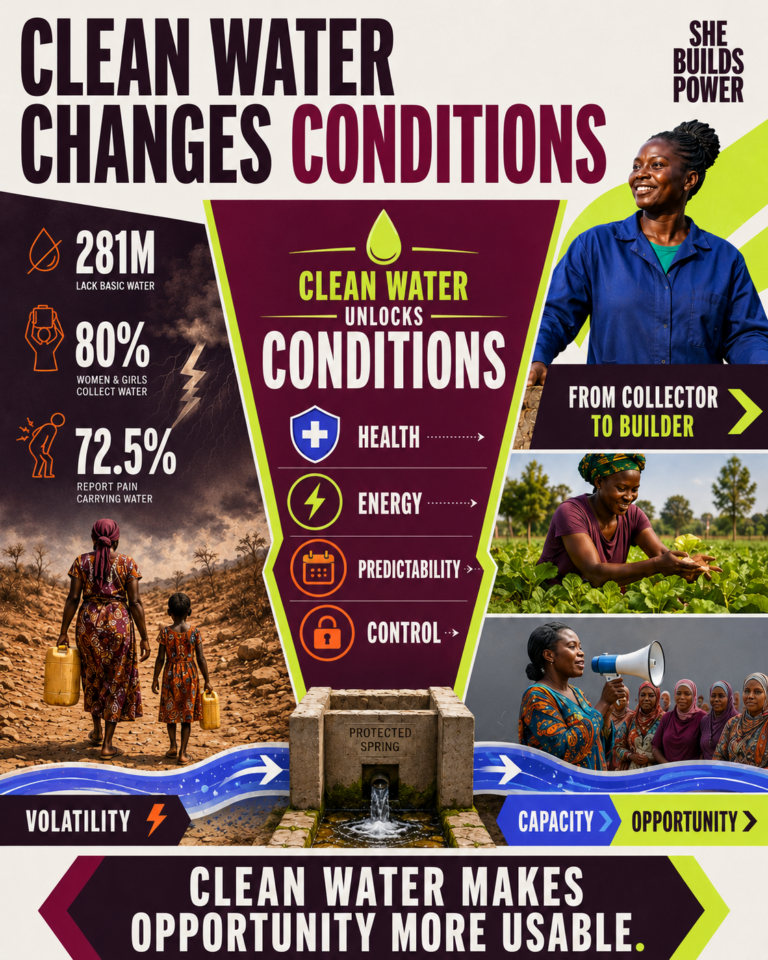
In 2024, 281 million people in Eastern and Southern Africa still lacked basic drinking water services.[1]
And the work created by that missing infrastructure is not evenly distributed. In Sub-Saharan Africa, women and girls are the primary water collectors in nearly 80% of households without water on premises.[2]
We usually call this a time burden. But economically, it is also a reliability problem.
A woman who doesn’t know how long collecting water will take cannot fully control the beginning of her workday.
A woman caring for family members repeatedly sickened by unsafe water cannot know whether she will be able to work tomorrow.
A farmer without sufficient water cannot confidently plan production.
A shopkeeper who has to leave to collect water cannot reliably keep her business open.
Water scarcity creates volatility.
And economic opportunity depends heavily on the opposite: reliability.
Clean Water Protects Productive Capacity
The health consequences of unsafe water are well documented. The World Health Organization estimates that unsafe drinking water, sanitation, and hygiene contribute to more than one million diarrhoeal deaths each year.[3]
But for women water collectors in Africa, another health cost receives far less attention:
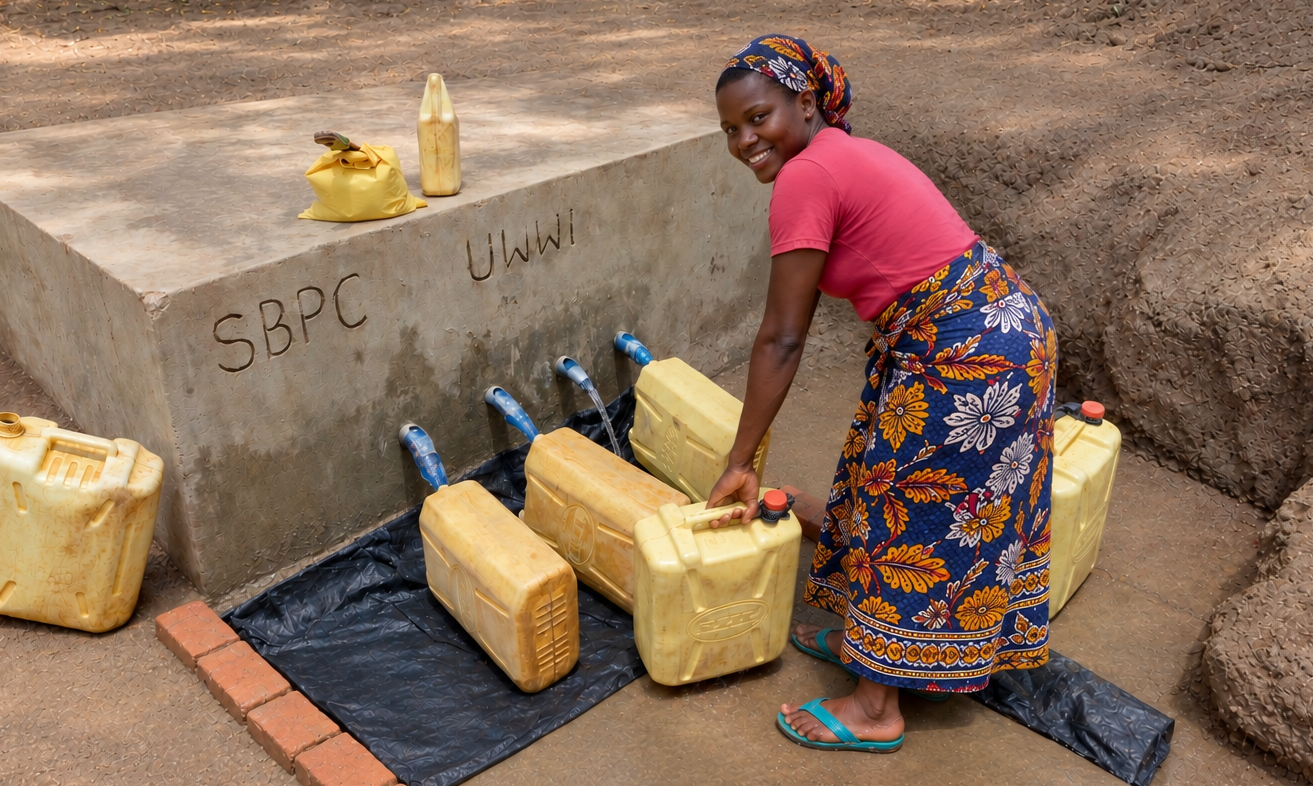
The physical work of getting water. A 20-litre container weighs about 20 kilograms.
A 2024 study of 618 women carrying water in northeastern Ethiopia found that 72.5% reported musculoskeletal symptoms during the previous year. Greater distance and heavier loads increased the risk.[4]
A broader review of evidence from Sub-Saharan Africa similarly found strong links between repeated water fetching and chronic pain, injury, and musculoskeletal dysfunction.[5]
So when safe water moves closer to a community, what disappears is not simply walking time.
It can mean less chronic physical strain. Fewer illnesses. Less caregiving caused by preventable illness. Fewer medical expenses. More energy. More days when a woman can actually do what she planned to do.
That is why water should be understood as more than health infrastructure.
It is infrastructure that protects human capacity.
But Saving Time Does Not Automatically Create Income
Here is where the standard development narrative gets a little too convenient:
Give women water.
Save women time.
Women use that time to earn money.
Poverty declines.
Human lives are not quite that tidy.
Research has found that improved water access can reduce women’s unpaid work without necessarily producing an equivalent increase in paid employment.[6] Recent research with women in Kenya, Zimbabwe, Honduras, and Guatemala reaches a similar conclusion: water affects women’s ability to participate economically, but time is only one piece of a much larger system.[7]
Because a woman can gain two hours and still lack capital.
She can have water and still lack land.
She can have time and still lack technical skills, childcare, market access, transportation, or the authority to make economic decisions.
And she may decide to use some of those hours to rest, care for herself, participate in community life, or spend time with her children. That isn’t wasted economic potential.
That is a human being getting part of her life back.
Time itself is not an economic opportunity. It is a condition that can make opportunity possible.
This is Why Water Belongs Inside a System
This distinction shapes how we think about women-led poverty solutions at She Builds Power.
We do not expect one intervention to perform the work of an entire economic and social system.
Water removes certain constraints. Food systems remove others. Access to capital removes others. Training, expertise, networks, and leadership create still more possibilities.
Together, they form what we call The Operating System to Catalyze Local Power.
The idea is simple:
People often already possess enormous capability. What they lack are the conditions that allow that capability to operate.
Clean water can create some of those conditions. A woman who no longer spends hours finding water may gain greater control over her day. A household experiencing fewer water-related illnesses may retain more income. A farmer with reliable water may produce more consistently.
But water becomes even more powerful when those changes meet skills, productive assets, markets, land access, and catalytic capital.
That is how reducing a constraint can become expanding an opportunity.
From Water Collector to Water Builder
There is another systems failure hidden inside the water crisis.
Women often know more about their community’s water problems than almost anyone. They know which sources disappear during drought. They know where queues form. They know which children are getting sick. They understand the water system because they live inside its failures.
Yet historically, the technical knowledge and authority to solve those failures have often belonged somewhere else.
That is an enormous missed opportunity.
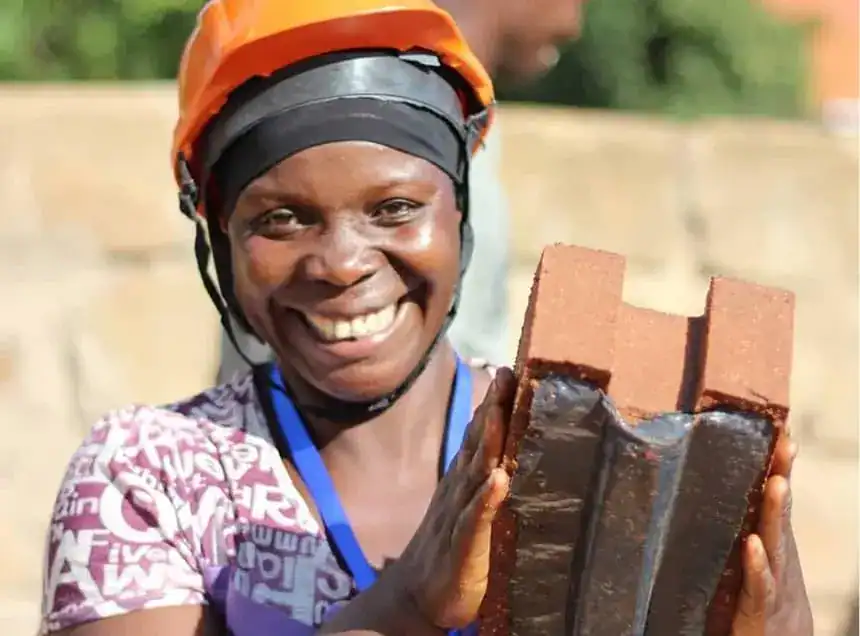
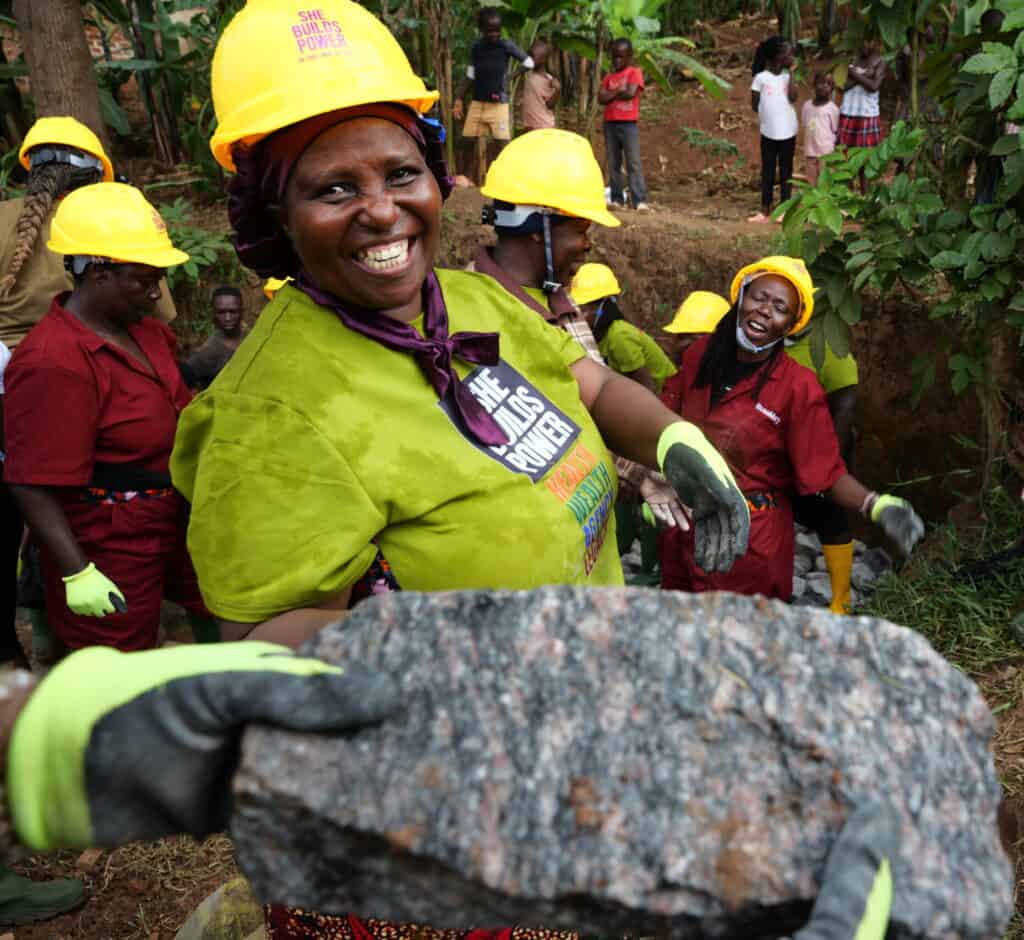
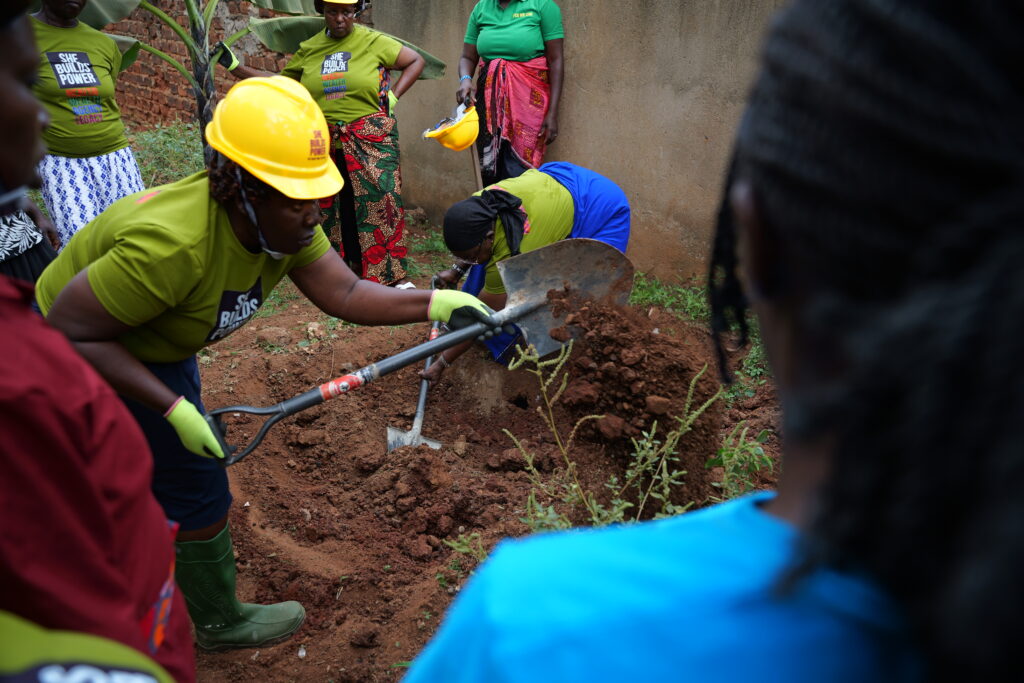
At She Builds Power, women are trained before construction begins to assess water problems, understand the technology, mobilize their communities, participate in decisions, and lead the creation of the infrastructure itself.
The woman who once carried the water can become the woman who knows how to build the system.
Now the intervention produces something beyond infrastructure. Knowledge remains local. Technical capability can be used again. Women can train others. Communities gain people capable of solving the next problem.
And women move from managing the consequences of a failing system to helping shape the system itself.
That is where women-led poverty solutions become particularly powerful.
So Why is Clean Water Access Important for Ending Poverty?
Because water scarcity in East Africa is not only a water problem.
It is a health problem.
A labor problem.
A food problem.
A productivity problem.
A household finance problem.
And increasingly, a climate resilience problem.
That does not mean a single water project can solve all of them. Quite the opposite. A well cannot create a market. A spring cannot provide business capital. A water system cannot dismantle every barrier women face.
But reliable clean water can change the conditions under which all those other systems operate.
That is its real economic power.
Clean Water Does Not Create Opportunity. It Makes Opportunity More Usable.
And perhaps that gives us a better way to measure success.
Not simply: How many hours did women save?
But: Are women healthier? Are households experiencing fewer preventable shocks? Do women have greater control over their schedules? Can they use water productively?
Do they have access to the knowledge, resources, markets, land, and capital that allow them to turn greater capacity into greater choice?
And ultimately:
Are Women Gaining Greater Power Over the Systems That Shape Their Lives?
Because the goal is not to free women’s time simply so we can fill every recovered hour with more work.
The goal is to remove the conditions that unnecessarily consume women’s health, labor, money, and potential—and replace them with conditions in which women have greater ability to decide what happens next.
A clean water source can shorten a walk.
A functioning system can build a future of opportunity.
Sources
-
World Bank. Water in Eastern and Southern Africa. 2025 JMP data reporting that 281 million people in Eastern and Southern Africa lacked basic drinking water services in 2024.
-
World Bank. The Gendered Burden of Water Collection in Sub-Saharan Africa. Reports that women and girls bear primary responsibility for water collection in nearly 80% of households lacking direct water access.
-
World Health Organization. Drinking-water and Water, Sanitation and Hygiene: Burden of Disease. WHO estimates that more than one million diarrhoeal deaths annually are attributable to unsafe WASH.
-
Legambo District Water-Carrying Women Study. Frontiers in Public Health, 2024. Community-based study of 618 women in northeastern Ethiopia found a 72.5% prevalence of self-reported musculoskeletal symptoms.
-
Meeuwisse, S., Elliott, S.J., Bennett, A. & Kapoor, V. Water fetching and musculoskeletal health across the life-course in Sub-Saharan Africa: A scoping review. PLOS Global Public Health, 2024.
-
Gross, E., Günther, I. & Schipper, Y. Women Are Walking and Waiting for Water: The Time Value of Public Water Supply. Economic Development and Cultural Change. Research in rural Benin found that reduced water-collection time did not automatically translate into increased women's market labor.
-
PLOS Water. “If we have water, we have money”: A qualitative investigation of the role of water in women's economic engagement in Guatemala, Honduras, Kenya, and Zimbabwe. Examines water as a structural determinant of women's economic participation, including time, health, productive uses, and economic resources.