The Difference Between a Seat and a Say
Inclusion has become sone of the most comfortable words in development.
It photographs well. It fits neatly into a grant report. It lets an organization claim progress without asking the harder question underneath it: progress toward what, exactly?
The word suggests generosity — a wider table, more voices in the room, a door held open for someone who was once kept out. And that generosity is real. For a woman who has never been asked her opinion on a project built in her own community, being asked at all is not nothing. But it is not enough, and pretending otherwise is where our field’s most persistent failures begin.
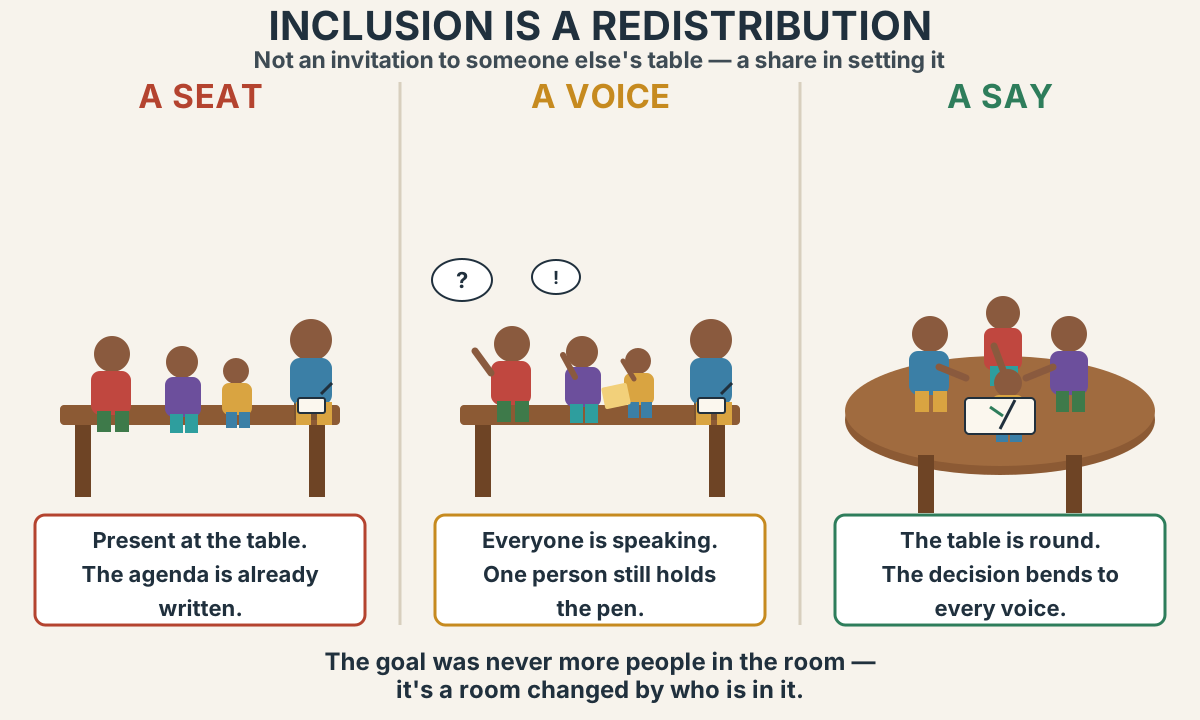
Because inclusion, as most institutions practice it, is a theory of access. It answers the question of who gets into the room. It rarely answers the harder question: once they’re in it, does the room change?
The word suggests generosity — a wider table, more voices in the room, a door held open for someone who was once kept out. And that generosity is real. For a woman who has never been asked her opinion on a project built in her own community, being asked at all is not nothing. But it is not enough, and pretending otherwise is where our field’s most persistent failures begin.
Because inclusion, as most institutions practice it, is a theory of access. It answers the question of who gets into the room. It rarely answers the harder question: once they’re in it, does the room change?
The Data Behind the Discomfort
This isn’t a rhetorical concern. It’s a measurable one.
The World Bank’s own 2020 review of participatory development projects found that while community participation is now a near-universal requirement on paper, fewer than 30% of those projects gave communities actual decision-making authority over design, budget, or implementation. The rest built participation in as consultation — a listening exercise conducted before the real decisions were made elsewhere.
The pattern repeats at the level of formal political power. UN Women reports that women hold roughly 26% of parliamentary seats globally, a number that has more than doubled since 1995 and is routinely cited as evidence of progress. It is progress. But a seat is not synonymous with a say — women legislators are consistently underrepresented on the committees that control finance, defense, and infrastructure, the portfolios where budgets and priorities are actually set. Representation has climbed. Influence over outcomes has climbed more slowly, and in some sectors, has barely moved.
Put plainly: a woman can be in the meeting and not set the agenda. A community can be surveyed for input after the blueprint is already drawn. A local leader can be thanked for her participation while her knowledge is filed as anecdote rather than treated as expertise. A girl can be invited to speak, on the condition that what she says fits what the room already expected to hear.
None of that is inclusion. It is proximity to power, dressed as power itself.
Why the Distinction Isn’t Academic
It would be easy to dismiss this as a semantic argument — a matter of definitions rather than outcomes. The evidence suggests otherwise.
The OECD’s review of development program failures found that projects designed without meaningful local participation in decision-making were significantly more likely to fail outright or require costly redesign after implementation. The reverse held too: initiatives that gave communities real authority from the planning stage — not just a voice in a feedback session — showed measurably higher rates of long-term sustainability.
A separate study in World Development examined why some environmental and social programs adapt well to local conditions while others collapse on contact with reality. The determining factor wasn’t funding level or technical sophistication. It was whether local knowledge and leadership were structurally embedded in the program’s decisions, not layered on afterward as color commentary.
This is the uncomfortable part for institutions that have built entire departments around “stakeholder engagement”: the failure mode isn’t a lack of inclusion. It’s inclusion that stops at the threshold. Programs can hit every box on a participation checklist and still fail, because the checklist measured presence, not power.
The Counterargument Worth Taking Seriously
There is a real objection here, and it deserves more than a dismissal.
Genuine decision-making authority takes time. Consensus-building is slow. Handing budget control or design authority to a community with no prior institutional experience managing either can introduce delay, conflict, or even mismanagement — especially in crises where speed saves lives, or in fragile settings where local power structures are themselves contested or exclusionary. A flood response cannot always wait for a six-month governance process. And “the community” is never a single voice; redistributing authority to whoever is already loudest or best-connected can simply replace one exclusion with another.
These are legitimate constraints, not excuses to dismiss. But they are arguments for designing authority-sharing carefully — building in interim decision rights, mentorship, transparent resource tracking, safeguards against local elite capture — not arguments for abandoning it in favor of consultation theater. The existence of a hard problem is not evidence that the easier, shallower version is the right one. It’s evidence that the deeper version has to be built with more care, not less ambition
What Changes When the Room Changes
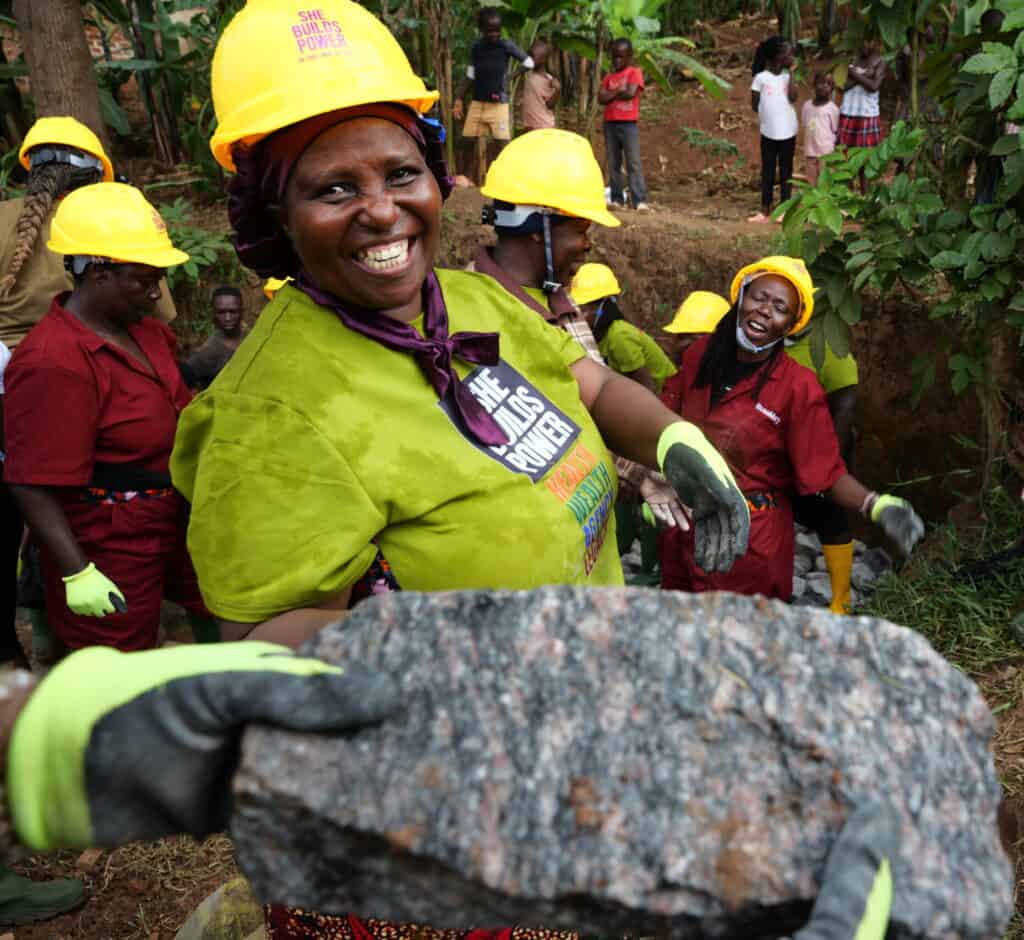
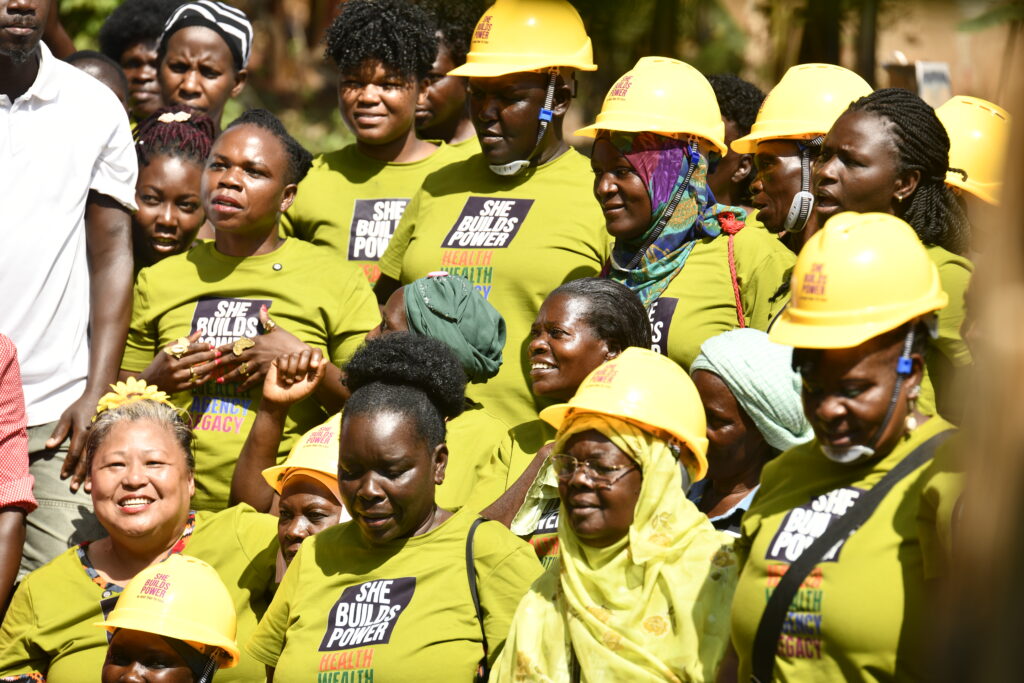
At She Builds Power, this distinction shapes how we define our own success. We do not measure inclusion by how many women attend a training or how many community members are surveyed before a project breaks ground. We measure it by whether women are entering rooms as engineers, trainers, financial managers, and organizers — people whose knowledge functions as strategy, not as testimony collected on the way to someone else’s conclusion.
That shift matters because the people closest to a problem carry a form of expertise that cannot be replicated by an outside team, however well-intentioned or well-funded. They know the history behind a failed pipe repair from a decade ago. They know which family disputes will complicate a land agreement. They know the difference between the dry season on paper and the dry season that actually arrives. A plan can be technically flawless and still fail, because it was built without the knowledge that only proximity provides.
This is not a sentimental claim about the wisdom of communities. It is a structural claim about where information lives, and what happens to a project’s odds of survival when that information is treated as decoration rather than data.
Redefining the Word
Inclusion, properly understood, is not an invitation into someone else’s plan. It is a redistribution — of authority, of resources, of the right to define what the problem even is in the first place.
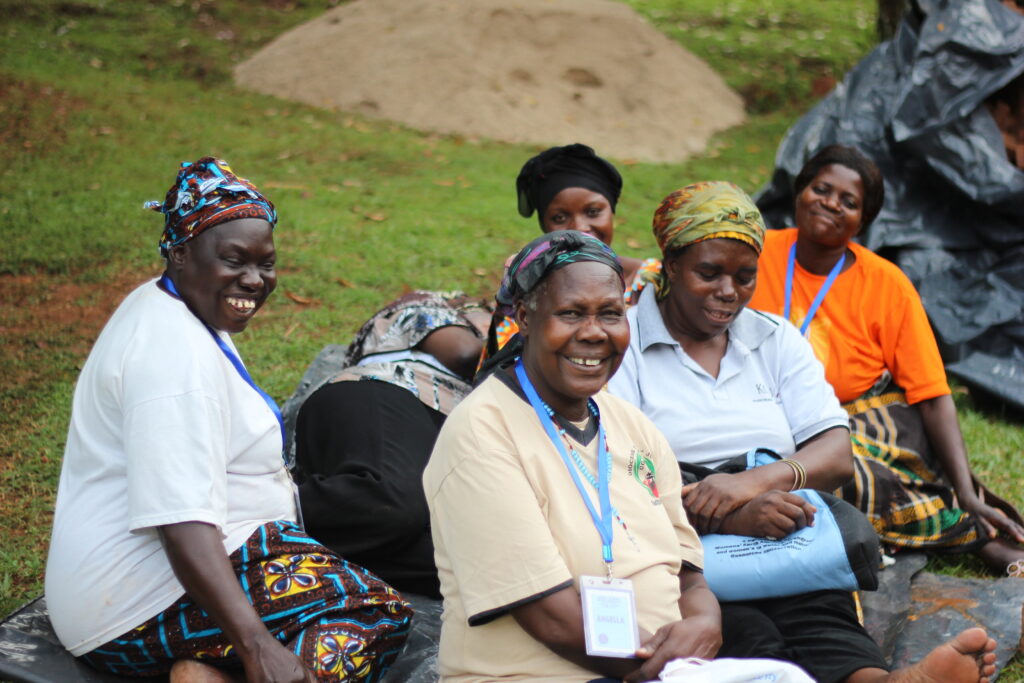
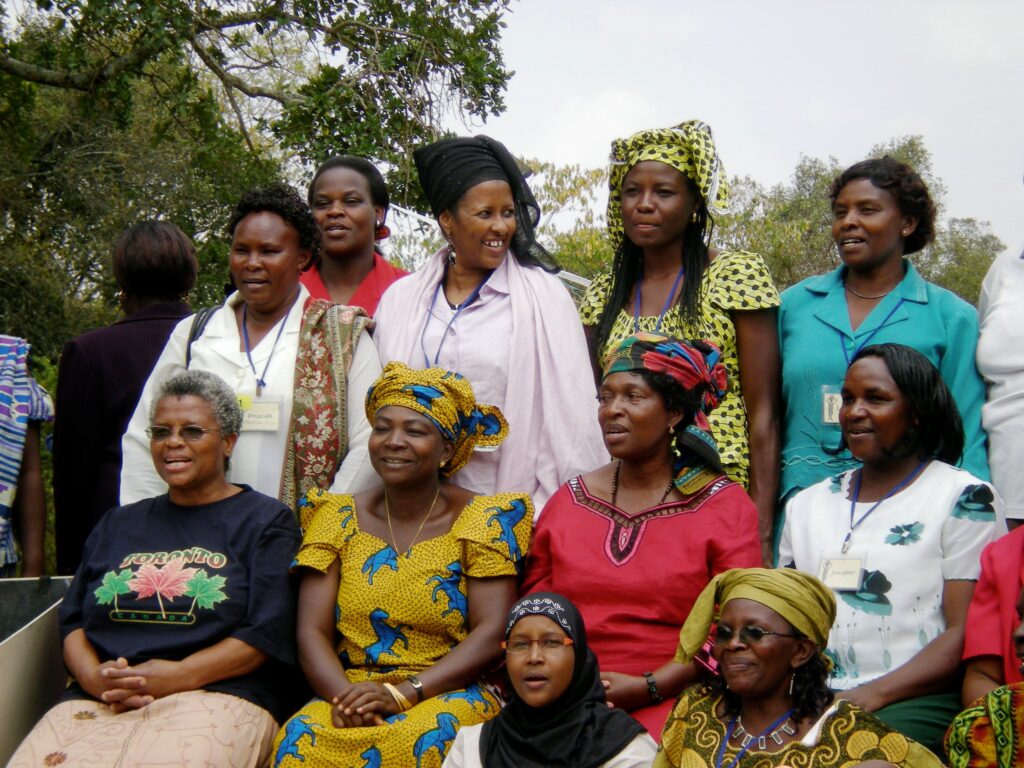
That redefinition is harder to implement than a participation checklist, and harder still to summarize in a grant report. It requires institutions to give up something real: control over the agenda, the budget, the definition of success. It asks funders and organizations to sit with the discomfort of not knowing, in advance, exactly what the community will decide.
But the alternative — inclusion as decoration — has a cost that shows up later, in projects that looked successful at the ribbon-cutting and collapsed within two years, in communities that grew fluent in being consulted and cynical about being heard.
The goal was never simply to bring more people into the room.
It is to make sure the room itself is changed by who is in it.