Infrastructure Is Only As Durable As Who Maintains It
Physical infrastructure doesn’t fail because of bad engineering. It fails because of missing ownership. Documented cases from Ghana, Mali, and across Sub-Saharan Africa show externally managed water and agriculture projects collapsing within years of donor exit, not because the pipes broke, but because no one was trained to fix them. The Kpong Irrigation Project in Ghana and the Programme de Mise en Valeur in Mali are both documented as donor-terminated failures, with evaluations conducted by World Bank and regional development partners in the early 2000s citing weak local stakeholder inclusion as the root cause. The hardware was there. The knowledge, the relationships, the local authority to act: none of it was.
Development projects designed without women’s input routinely fail to account for how women actually use water, land, and transport. CGIAR’s 2021 synthesis on women’s leadership and climate resilience, and the Asian Development Bank’s 2019 report on inclusive municipal planning, both arrive at the same conclusion: when women are excluded from infrastructure design, the resulting systems reflect someone else’s assumptions about how communities function. That is an equity problem, yes, but it is equally a systems-efficiency problem. Leaving women out is a design flaw.
What The Evidence Actually Shows About Women-led Systems
Women’s leadership in infrastructure: Data and Outcomes
In a landmark peer-reviewed study of village councils in Rajasthan and West Bengal, Chattopadhyay and Duflo (2004, The Quarterly Journal of Economics) found that where the village head was a woman, councils invested significantly more in drinking-water infrastructure and road development. A synthesis of 13 countries found that equal women’s participation in community water management correlates directly with project sustainability, not just short-term completion. These are not feel-good correlations. They are documented shifts in resource allocation driven by who sits at the decision-making table.
The case studies extend far beyond India. In Tanzania, a well-siting project succeeded because women’s knowledge of local soil and water conditions was incorporated into site selection; a prior all-male committee had chosen a site that dried up entirely. In Morocco, women’s participation in a rural water supply project correlated with a 16% increase in primary school attendance over four years. In Peru, a road project that employed women during construction and included them in planning reported 77% increased mobility, 67% greater travel safety, and 43% improvement in income generation for women in the area.
In Malawi, documented gains in water infrastructure quality were tied directly to women’s inclusion in decision-making. Taken together, these are not isolated wins. They form a pattern: when women are in the room where infrastructure is planned, built, and managed, the outcomes are more equitable, more durable, and more likely to reach the people who need them most.
Women’s Leadership is the Connective Tissue Development Keeps Overlooking
Physical infrastructure connects places. Women’s leadership connects people, resources, knowledge, and time across generations. A water pipe delivers water once. A woman trained to build and repair that pipe delivers water for a generation. A woman running a village savings group creates financial infrastructure that circulates within a community long after any donor has moved on. This is the mechanics of why women’s leadership is infrastructure, not a metaphor, but a measurable transfer of capacity.
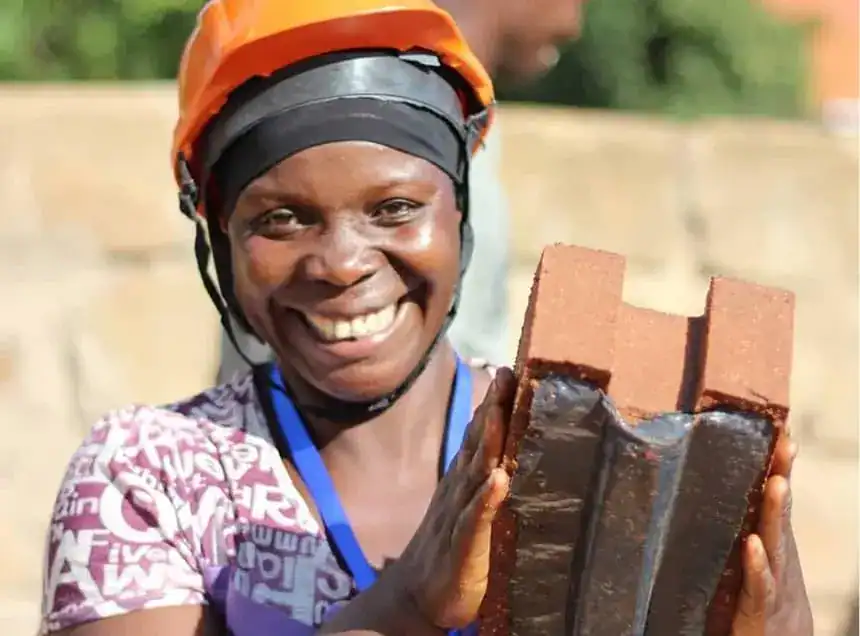
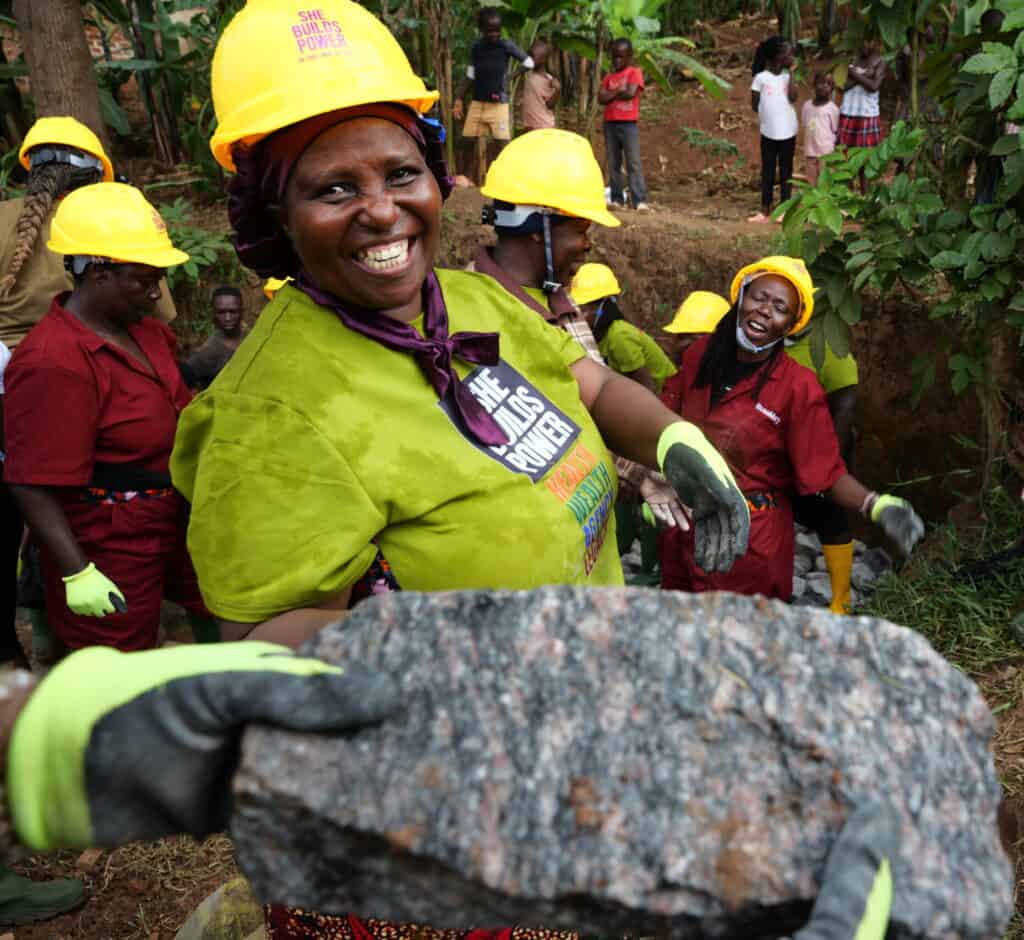
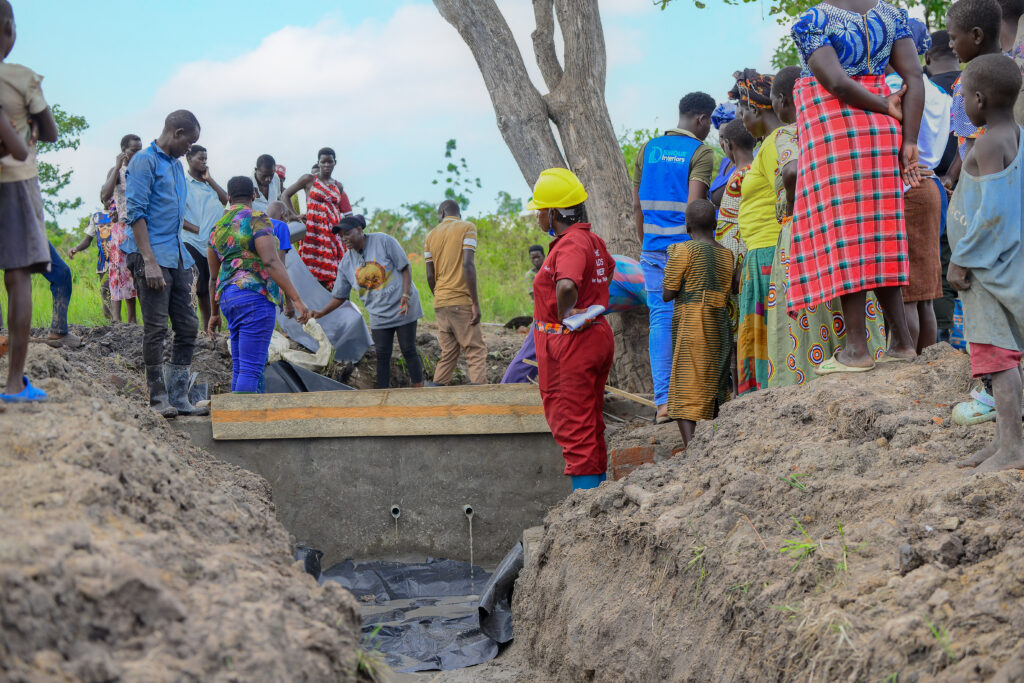
She Builds Power trains women in East Africa to construct and maintain biosand filters, manage rainwater harvesting systems, and lead community water programs, not as recipients of infrastructure, but as its engineers and stewards. In Uganda alone, the program has supported the construction of 100 biosand filters and 7 rainwater harvesting systems, bringing clean water to more than 3,000 people. One woman trained through the program went on to earn over $2,500 as a WASH technician and entrepreneur. The water system didn’t just deliver water. It delivered economic agency.
Gender-responsive Infrastructure And The Leadership Pipeline For Women
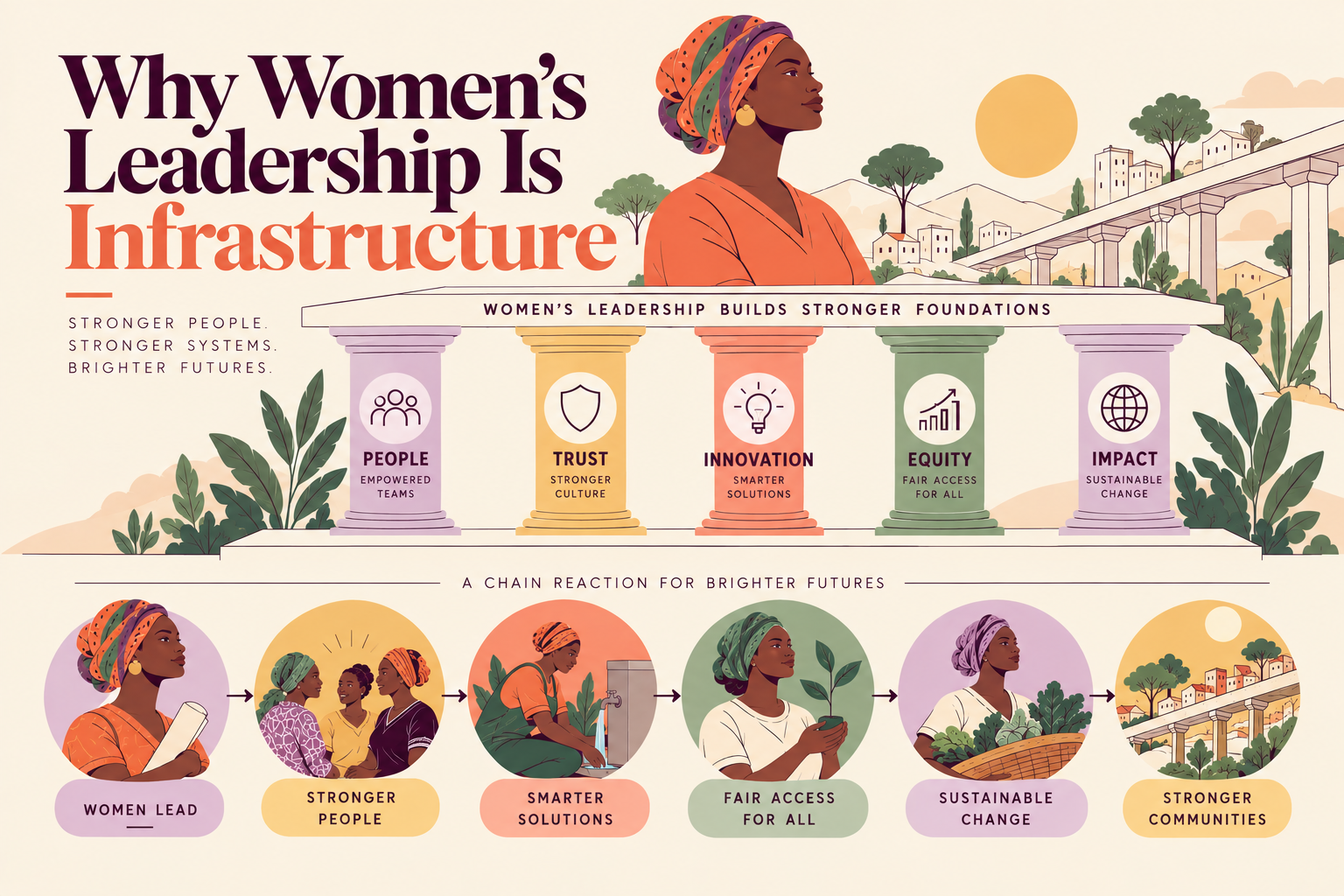
The same logic runs through She Builds Power’s agriculture and finance programs. Women-led sustainable food enterprises and savings groups function as economic infrastructure, moving resources through communities in ways that top-down programs rarely reach.
The integrated model, water, food, finance, treats women’s leadership as the operating system, not an add-on feature. Building a genuine leadership pipeline for women at the community level is what converts a funded project into a self-sustaining system.
Naming This Changes How We Build, Fund, and Measure Development
Infrastructure attracts long-term capital investment. It gets maintenance budgets. It gets measured for durability, not just for whether it was installed. If women’s leadership functions like infrastructure, and the evidence says it does, then it deserves the same sustained investment. That means multi-year commitments to the human systems that make physical systems last, not project-based grants that evaporate in 18 months and not one-off trainings with no follow-through.
UN Women, the World Bank, and gender-responsive budgeting frameworks are beginning to operationalize this logic, recommending lifecycle-based approaches that analyze who uses infrastructure, involve women in planning and design, and track whether outcomes are equitable and durable.
The frameworks exist. Consistent adoption does not. Closing that gap is where the real work sits, and it requires funders, governments, and implementing organizations to treat women’s leadership not as a program outcome but as a precondition for development that holds.
She Builds Power is hosting a webinar that takes this argument further, into the data, the case studies, and direct conversations with women leaders who are the infrastructure in their communities. If this piece raises questions you want to explore, that is exactly where they belong. Reach out to our team to register and join the conversation.
The System Beneath The System
Roads, pipes, bridges, what all of them share is this: they are built once and maintained indefinitely. The communities that sustain them are the ones that thrive. Women’s leadership is why women-led water projects outlast donor-funded ones. It is why communities with women in governance build more of what their people actually need. It is why a village in Uganda now has clean water, not because a donor paid for a filter, but because a woman was trained to build it, explain it, fix it, and teach the next person to do the same.
Understanding why women’s leadership is infrastructure reframes what we build, what we fund, and what we count as success. In community after community, the system beneath the system has a face, a name, and knowledge that development budgets have spent decades failing to measure. She Builds Power’s webinar is where that conversation continues. The room is open, come build with us.