Corporate Giving Water Programs: A Deep Dive into CSR
Why Corporate Giving Water Programs Are Reshaping Global Water Access
Corporate giving water programs are one of the most powerful tools companies have to drive real, lasting change — for communities, ecosystems, and their own bottom lines.
Leading programs today are moving away from simple charity and toward high-impact, scalable models that prioritize long-term resilience:
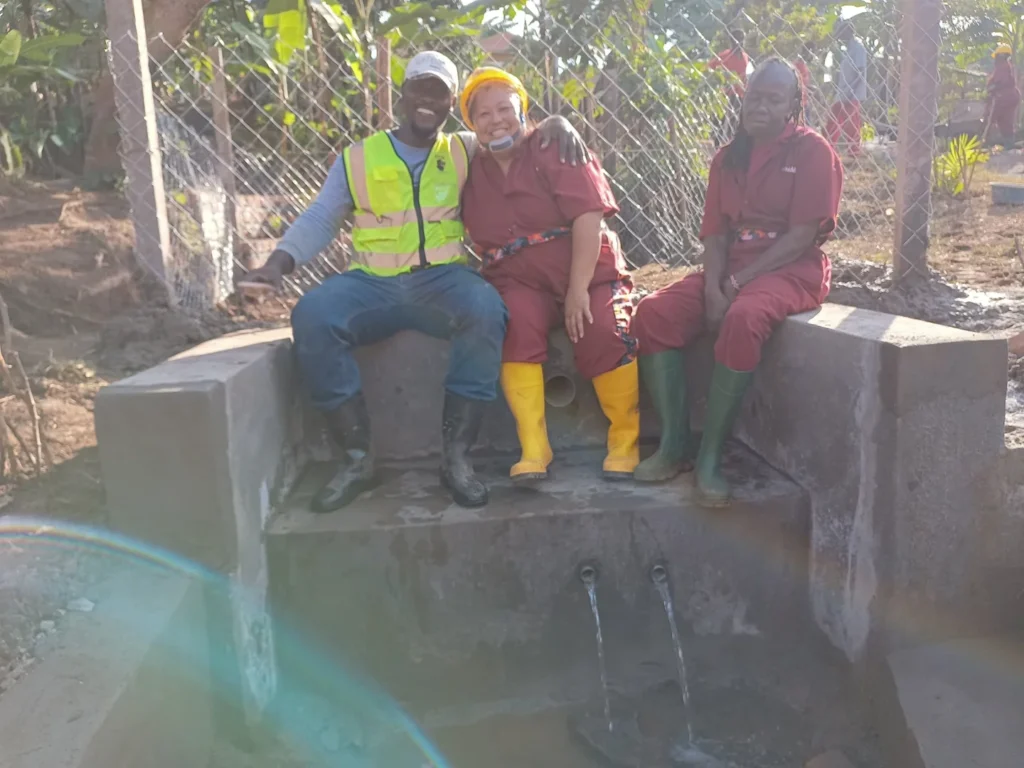
- Integrated WASH Infrastructure: Combining hardware with women’s leadership training to ensure systems stay functional for generations.
- Watershed Replenishment: Strategic initiatives that return more water to the environment than a company consumes in its operations.
- Water Microfinance: Mobilizing capital to allow families to invest in their own point-of-use household water and sanitation solutions.
- Domestic Access Initiatives: Closing the water gap in developed nations through innovative off-grid technology and community-led systems.
- Nature-Based Solutions: Using reforestation and wetland restoration to naturally filter and secure water quality for downstream users.
The scale of the problem is hard to ignore. Over 2 billion people still lack access to safe water today. And behind every statistic is a woman — walking upwards of 8 hours to collect water that may make her family sick, missing work, skipping or worse, dropping out of school, building nothing because she’s surviving instead.
Water isn’t just a resource. It’s the foundation of everything else. Health. Food. Income. Education. Power.
That’s why the most effective corporate water programs aren’t just writing checks. They’re funding systems — infrastructure, training, local ownership, and technology — that keep working long after the ribbon is cut.
I’m Gemma Bulos, founder of She Builds Power, and I’ve spent decades working at the intersection of water, food, and finance to train women as builders of community systems — not recipients of aid. My work with corporate giving water programs has shown me what separates one-time projects from generational change. Let’s break down what’s working, what’s scaling, and what every mission-aligned company needs to know.
The Global Imperative for Watershed Resilience
When we talk about the water crisis, we aren’t just talking about empty taps. We are talking about a systemic failure that traps 2.1 billion people in a cycle of survival. In sub-Saharan Africa, particularly in the regions where we work like Uganda, Kenya and Tanzania, the lack of safe water is the primary barrier to economic development.
The crisis is being intensified by climate change. For instance, scientific research on wildfire impacts on watersheds shows an eightfold increase in high-severity wildfires in the western United States since 1985, which drastically affects water quality and runoff for millions downstream. Whether it’s fire in the West or drought in the Butambala District, the result is the same: water scarcity that destabilizes health, education, and food security.
For a corporation, investing in water is a play for climate resilience. When watersheds are protected, communities are buffered against the extremes of flooding and drought. This isn’t just “doing good”; it’s water resource management that secures the very environments where businesses operate and employees live.
5 High-Impact Models for Corporate Giving Water Programs

In our experience, the most successful corporate giving water programs move past the “charity” mindset and toward “investment.” Here is how the most innovative companies are structuring their involvement:
1. Watershed Restoration and Nature-Based Solutions
Forward-thinking corporations are looking at the source. By funding reforestation and wetland revival, they aren’t just cleaning water; they are rebuilding the “green infrastructure” that filters it naturally.
Strategic corporate-community partnerships driving 100% water replenishment have become a gold standard. For example, some global beverage leaders have achieved their goals of returning more than 100% of the water used in their finished products back to nature and communities. This is done through massive projects like restoring 1,700 acres of forest or improving thousands of hectares of floodplains. Impact reports showcasing ecosystem restoration and community benefits provide the transparency that modern stakeholders demand, proving that biodiversity and business can thrive together.
2. Scaling Impact through Corporate Giving Water Programs via Microfinance
Sometimes, the best way to give is to lend. Innovative microfinance models empowering women to invest in their own water solutions have mobilized billions of dollars globally. Instead of waiting for a handout, families take out small, affordable loans to install household taps or rainwater catchment tanks.
With over $7.4 billion in capital mobilized for these loans worldwide, this model has reached 85 million people. It turns a “beneficiary” into a “customer” and a “builder.” This is a catalyzing global movement for self-determined water access that we champion at She Builds Power because it respects the agency of the local community.
3. Domestic Access and Economic ROI
Water poverty isn’t just an “overseas” issue. Even in developed nations, hundreds of thousands of households lack a working tap or toilet, or have chemically and biologically contaminated water. Corporate partnerships closing the domestic water divide are finding that the economic return is staggering.
In the US alone, the lack of water access results in an $8.58 billion annual economic loss. However, every $1 invested in closing this gap returns nearly $5 to the economy through increased productivity and health gains. By funding off-grid systems and piped connections, corporations are directly contributing to job creation and community-led programs building resilient local economies.
4. Future-Proofing Communities with Corporate Giving Water Programs and Tech
Transparency is the new currency of CSR. High-impact programs now use real-time sensors, GPS tracking, and cloud computing to monitor water flow and system health. Organizations that earn Charity Navigator top-rated transparency ratings often share this data publicly.
This tech-forward approach ensures that if a pump breaks in a rural village, the data is captured instantly, allowing for rapid maintenance. It moves the needle from “we built a well” to “we provided a permanent service.”
5. Integrated Systems: Water, Food, and Finance
At She Builds Power, we know water does not stand alone. The strongest corporate giving water programs connect water, food, finance, and women’s leadership so communities can build lasting systems, not just receive short-term aid. When women lead water solutions, the outcomes reach farther: better health, stronger household income, greater agency, and a legacy future generations can build on.
These integrated systems link strategies for water (water access and quality, sanitation, and hygiene), food (regenerative farming, agroforestry, nutrition, land leasing, and livestock), and finance (access to capital, market pipeline, entrepreneurship training) to strengthen local economies. When you learn about our program model, you see that we build women’s power to influence decisions, shape policy, and create generational wealth for her family.
| Investment Type | Direct Aid (Traditional) | Systems-Based (The SBP Way) |
|---|---|---|
| Focus | One-time equipment (pumps/wells) | Integrated community infrastructure |
| Leadership | Outside contractors | Local women-led implementers and committees |
| Sustainability | High failure rate after 2 years | Built-in maintenance and finance models |
| Outcome | Temporary relief | Long-term power and resilience |
Quantifying the ROI of Water Stewardship
Why should a C-suite executive care about corporate giving water programs? Because the ROI is undeniable. Beyond the moral imperative, there is a clear business case:
- Economic Returns: For every $1 invested in water and sanitation, there is a global average return of $5 in increased productivity and reduced healthcare costs.
- Employee Engagement: Employees want to work for companies with a soul. Participating in water initiatives boosts loyalty and morale.
- ESG and Risk Mitigation: Water scarcity is a top-tier business risk. By investing in local watersheds, companies secure their own supply chains and meet rigorous Environmental, Social, and Governance (ESG) goals.
- Operational Excellence: In industrial settings, providing WASH (Water, Sanitation, and Hygiene) access has been shown to reduce staff absenteeism by up to 29% and improve product quality by 35%.
We’ve seen these results firsthand. Documented impact from leading corporate-NGO collaborations shows that when you solve for water, you solve for the bottom line. You can read more about our impact to see how these numbers translate into real-world power for women and their families.
Powerbuilding: Transforming Access into Agency
At She Builds Power, we have a saying: “Access is a start, but agency is the goal.” Many corporate giving water programs stop at access—they provide the “thing.” We focus on Powerbuilding.
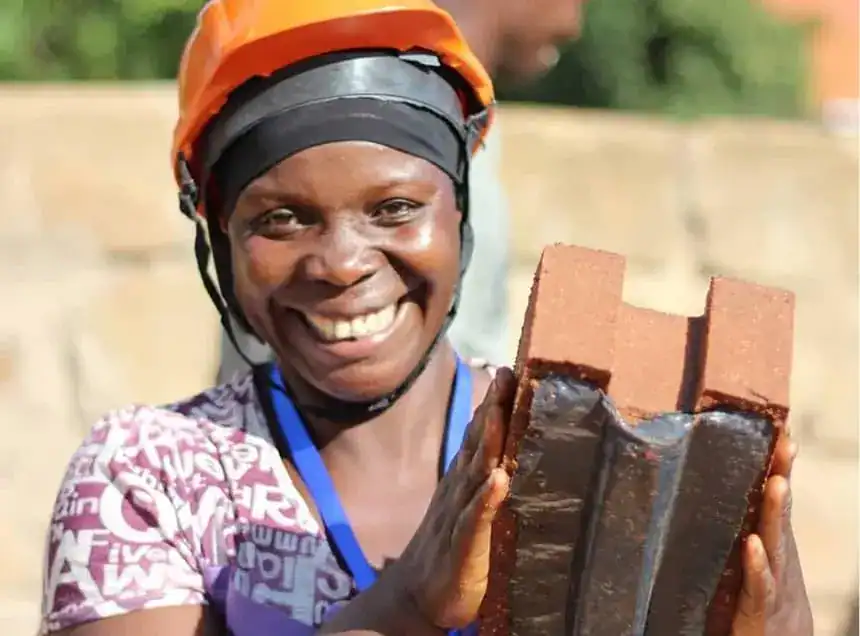
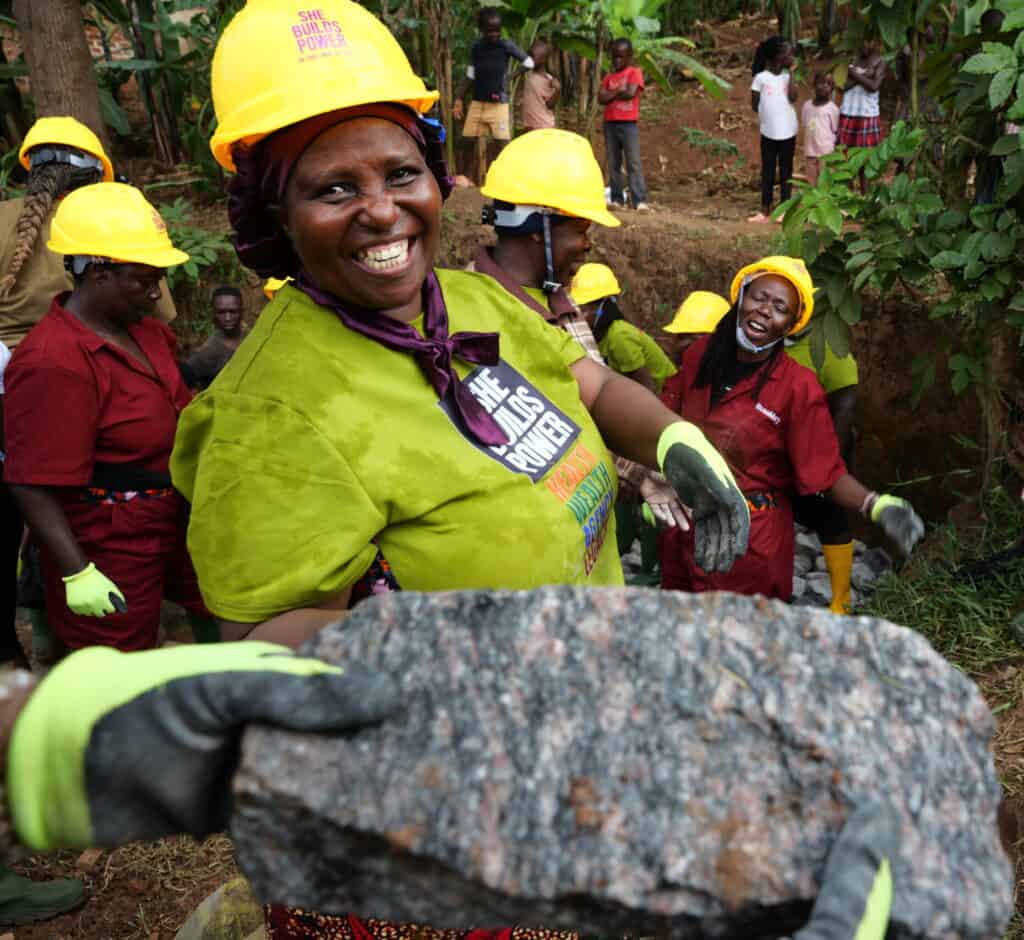
Powerbuilding means we don’t just install a pump; we train the women of Siaya County, Amuria, Butambala District and across East Africa, to be the engineers, the mechanics, and the financial managers of that system. We are moving from wells to wealth, ensuring that the community builds and owns the solution.
This is structural change. It’s the difference between a village waiting for a repairman from the city and a village where a woman leader has the tools and the bank account to fix it herself. You can read Amina’s story of powerbuilding to see how one drop of water, when managed by a trained woman, can ripple out to create a lifetime of resilience.
Frequently Asked Questions about Corporate Water Giving
What are the business benefits of water CSR?
Beyond the $5 to $1 ROI, companies see massive gains in brand reputation and risk mitigation. When water-stressed regions are increasing, being a leader in water stewardship ensures your “license to operate” in those communities remains strong.
How do corporations ensure their water gifts are sustainable?
Sustainability comes from local ownership and integrated systems. The best programs include maintenance training and a “finance” component (like a community water fund) to pay for future repairs. We call this embracing a “systems for life” approach to ensure lasting access.
Which regions are the primary focus for these programs?
While there is a huge need in sub-Saharan Africa (like our hubs in Uganda and Kenya), high-impact programs also target Southeast Asia, South Asia, Latin America, MENA, and even arid regions of the US. These are targeted projects addressing critical water challenges in diverse landscapes.
Conclusion: From Fragmented Aid to Lasting Power
The era of fragmented, “feel-good” charity is over. To solve the global water crisis, we need a systems approach that recognizes women as the architects of their own resilience. Corporate giving water programs are moving toward this visionary model—one where water, food, and finance intersect to build lasting power.
When corporations partner with us, they aren’t just funding a project; they are fueling a movement. They are transforming “recipients or beneficiaries” into “providers, and “burden bearers” into “builders.” If your organization is ready to move beyond the tap and toward true community agency, we invite you to contact us for partnerships. Together, we can support women-led water initiatives that don’t just provide water for today, but power for generations.