What Rural Women Know About Systems that Development Keeps Missing | International Day of Rural Women
What rural women know about systems that development keeps missing is visible in everyday decisions that most programs never think to ask about. Somewhere in rural East Africa, a woman is reading the sky. She knows by the cloud formation, the wind direction, and the behavior of certain insects that the rains will come late this season. She adjusts her planting schedule, switches to a shorter-cycle sorghum variety she saved from a strong harvest three years ago, and warns her savings group to hold reserves a little longer. She has done this, or something like it, her entire adult life. Her mother did it before her.
The development organization that arrived last year to “empower” her did not ask about any of it. They brought a curriculum, a training schedule, and a predetermined set of skills to deliver. They counted her attendance. They called her a beneficiary. This pattern, illustrated in evaluation after evaluation across sub-Saharan Africa and South Asia, represents one of the most persistent and costly blind spots in international development.
On International Day of Rural Women, the United Nations 2026 theme, “The Rise of Rural Women: Building Resilient Futures with Beijing+30,” calls explicitly for recognizing rural women’s contributions as food providers and environmental stewards. That recognition sounds right. But recognition without structural change is just another missed opportunity to harness the wisdom from generations of food providers.
The Practical Genius Development Keeps Overlooking
Rural women’s knowledge is not a soft asset. It is applied science, accumulated over generations and tested against real consequences. Women are the primary water collectors in 73.5% of households globally, according to FAO gender in agrifood systems data. That daily proximity to water sources means women understand rainfall patterns, seasonal spring behavior, and water quality in ways that outside engineers often lack. They regulate household use during dry spells and carry forward filtration and sedimentation knowledge that keeps families healthy when formal infrastructure doesn’t exist. Case studies from rural water-supply projects document what happens when that knowledge is excluded: wells sited without women’s input frequently miss seasonal water behavior, and maintenance systems designed without women’s involvement tend to fail faster.
In Uganda and Kenya, women smallholder farmers select and save seed for drought tolerance, pest resistance, cooking quality, and local soil compatibility. They dry maize cobs above cooking fires to protect them, store sorghum in containers with wood ash to deter pests, and exchange seeds through social networks that stretch across villages and seasons. These are not customs waiting to be replaced by “improved” techniques. They are agroecology practices with documented outcomes, reduced erosion, improved soil fertility, and distributed crop failure risk, that external inputs have struggled to replicate at the household level, particularly where supply chains are unreliable and input costs are prohibitive.
The same pattern holds in finance. Village Savings and Loan Associations, commonly known as VSLAs, were not invented by development organizations. They are formalized versions of rotating savings systems women have operated for decades. CARE introduced the structured VSLA model to Uganda in 1998, building on informal credit networks that already existed. A multi-country study across Uganda, Ghana, and Malawi found that approximately 36% of women in Ugandan treatment villages participated in VSLAs. These groups manage risk, build collective capital, and create accountability structures that formal financial products often struggle to match at the community level, where geographic distance and trust barriers limit bank access.
Why Development Programs Keep Getting Rural Women’s Knowledge Wrong
The failure pattern is well-documented and stubbornly consistent. In northwest Bangladesh, extension workers trained men on high-yield wheat, even though women were the ones who selected seed for planting. Women received no training, chose unsuitable seeds, and the project’s intended productivity gains collapsed. In Casamance, Senegal, engineers drained swamp land to build a rice water-control project. The soil was acid-sulphate toxic and became completely infertile. Women farmers who worked that land already knew this. No one asked them. In Mali, a soil and water conservation project was built directly on top of conservation work women had already done, without acknowledging or integrating it. When women’s contributions were finally recognized, they turned out to be essential to protecting the new project’s outcomes.
These are not edge cases from a different era. FAO gender development literature documents the same failure mode across regions and decades. Programs are designed before gender analysis is conducted. Women are classified as beneficiaries before anyone asks what they already know. Male household heads are consulted as proxies for household knowledge, and extension services direct training, technology, and credit at the recognized “farmer”, assumed in most program designs to be male. Mixed community meetings where men dominate decision-making get counted as community participation. Women’s attendance gets counted as women’s inclusion.
A World Bank review of programs in South Sudan found that rigorous gender assessments were rarely used, even in projects that targeted women and included gender-specific indicators. An Asian Development Bank review found that only three of twelve projects fully implemented quality gender action plans, and those three achieved the most comprehensive results. The evidence is consistent: gender analysis alone is not enough. When findings from that analysis are not carried through to program design, budgets, implementation, and monitoring, the same oversight reproduces itself at every stage.
What it Looks Like When A Program Builds On Women’s Systems Knowledge
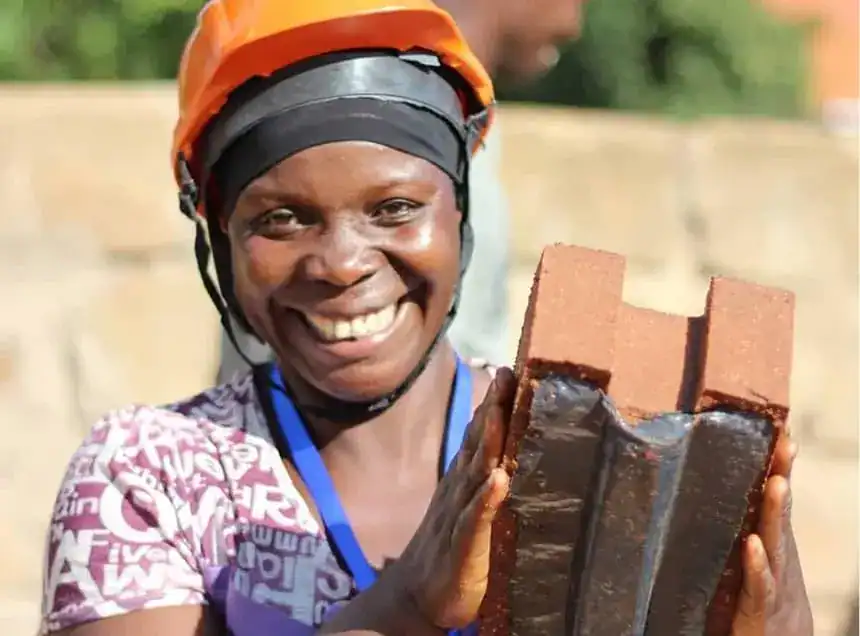
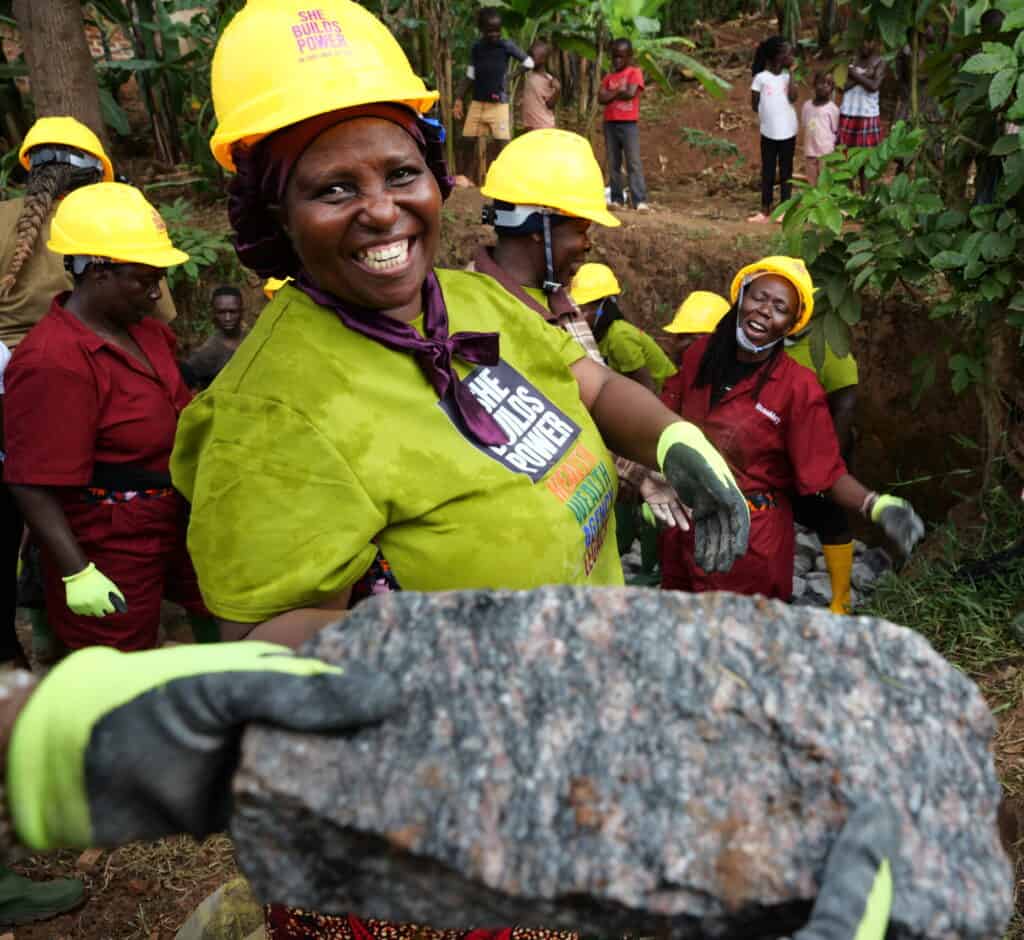
She Builds Power‘s programs in East Africa begin with a different question: not “what do these women need to learn?” but “what do they already know, manage, and lead?” Before any technical training begins, the process maps existing assets, existing networks, and existing expertise. Asset mapping functions as a design principle here, not a formality.
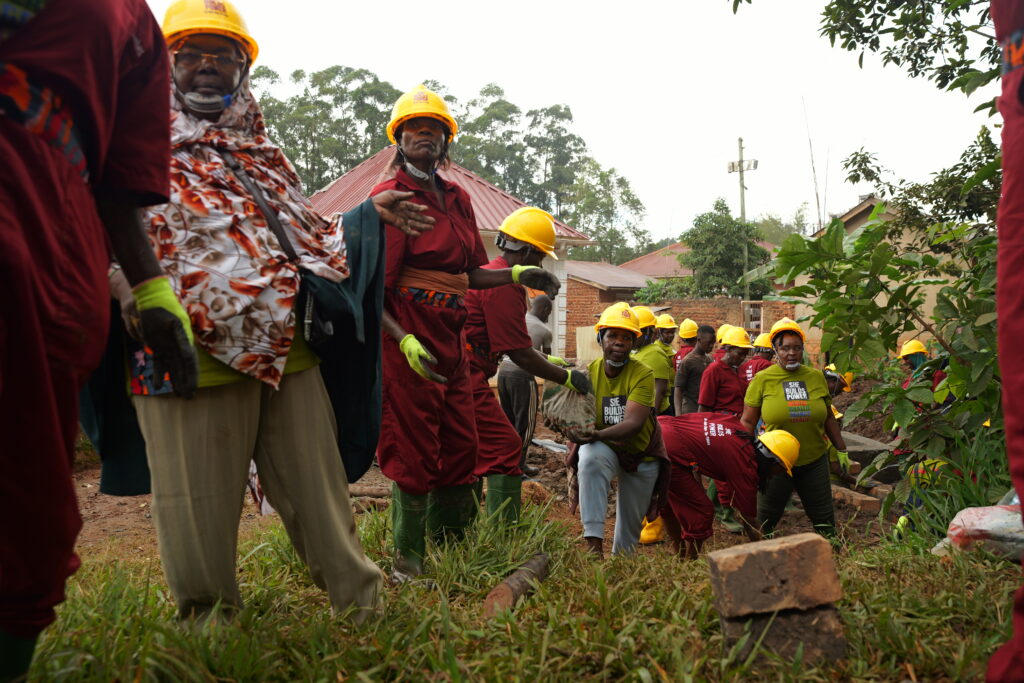
When She Builds Power trains women in clean water infrastructure, including biosand filter construction, rainwater harvesting, and spring well development across Uganda, Kenya and Tanzania, the starting point is the water knowledge women already hold. Training adds technical skills and materials to a foundation that already exists, rather than replacing local knowledge with an imported model. Women who complete the program become trainers, not just graduates. According to She Builds Power’s program reports, the intention is that knowledge stays in the community precisely because it is built with community knowledge from the beginning. That is the distinction between reinforcing capacity and simply replacing it.
The same logic applies to financial programming. She Builds Power integrates its savings group and financial literacy work with the informal credit networks women already run, rather than introducing parallel systems that compete with or undermine existing community trust. The organization reports more than 12,700 women meaningfully engaged across four East African countries, a figure that reflects participation in training, leadership roles, and passing the knowledge and skills forward to others. Taken together, the model reflects what gender-responsive rural development can look like when it moves beyond policy language and into actual practicum design.
What The Evidence Shows When Women’s Knowledge Is Centered
Ghana’s Rural Enterprise Program combined women’s knowledge of local farming and markets with business training, complementary inputs, and financial services. The documented outcomes, drawn from the program’s third-phase evaluation, included a 50% increase in income and 24% higher food security, along with greater diet diversity. In Uganda, women model farmers who served as locally credible agronomic knowledge holders increased adoption of recommended practices and contributed to shifting gender norms around who counts as an agricultural expert. In Niger, FAO Dimitra Clubs that prioritized women’s problem definition produced gains in agricultural production, collective action, and access to services.
The common features across successful programs are clear. Women participate in problem definition and priority-setting, not merely as trainees. Interventions use women’s existing networks. Local knowledge is combined with useful external resources, credit, extension, technology, and market access. Women hold visible roles as trainers, model farmers, extension agents, and decision-makers. Outcomes are measured beyond headcounts: income, food security, technology adoption, leadership roles, and control over assets all matter.
What Donors, NGOs, and Policymakers Can Demand Differently
The research is clear enough that programs cannot ignore or bypass rural women’s systems knowledge. What’s needed now is a shift in what donors fund, what NGOs measure, and what policymakers require. Fund gender analysis before program design, not as a compliance checkbox. Require programs to document what women already know and how the intervention builds on that foundation. Demand that outcomes include income, food security, asset control, agency, and leadership positions alongside activity counts.
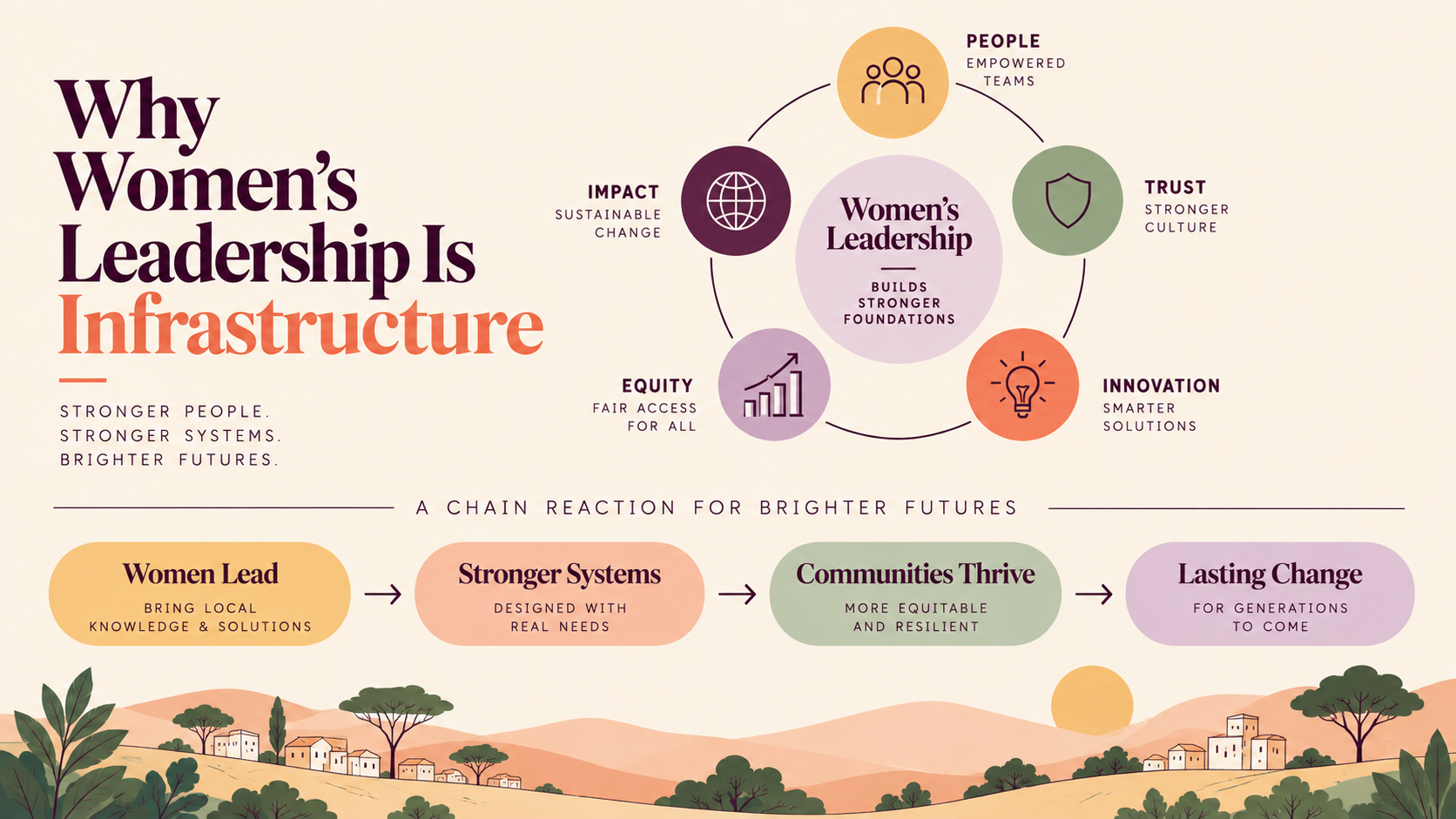
Supporting organizations like She Builds Power means backing a model that has done the harder work of building on existing expertise rather than importing predetermined solutions. That approach is consistent with a growing body of external evidence showing that participatory, women-centered design is associated with better sustainability and performance outcomes. Rural women are not blank slates waiting to be written on. They are systems thinkers, ecological managers, and community financiers who have been doing this work, largely without recognition, for generations.
The work is not to give women knowledge. The work is to stop discarding the knowledge they already hold. When programs are built on that foundation, the results reflect it. This is what it means to build power, not just deliver programs.
She Builds Power is accepting partnerships from donors ready to back this model. Contact the team to learn how your support makes this work possible.